96 Chapter 4: The Trobairitz
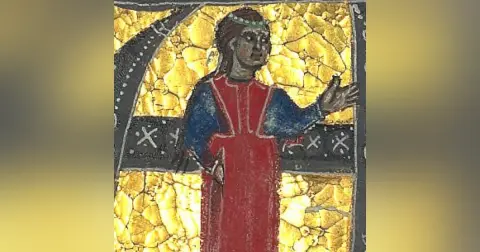


The trobairitz rewrite culture and humanity itself through verse and song.
[Lanquan li jorn by the Unicorn Ensemble plays]
I am pretty, so I’m much troubled
By my husband who I neither want nor desire.
And I’ll tell you why I’m troubled,
I am pretty…
it’s because I am a petite, very young girl,
I am pretty…
and I ought to have a husband who would make me joyful,
with whom I could play and laugh all the time.
I am pretty…
-Anonymous trobairitz
…for I say that those early troubadours
of the past are profoundly sinful.
they have imbued the world with false belief
by speaking ill of women in public;
and all those who hear this believe it to be true
and they agree that it is likely to be so-
and this is how they have led the world into error.
-Anonymous trobairitz [Quotes read by Dr. Tara Sewell-Lasater]
Joseph Campbell claimed that the troubadours invented our modern concept of love. While the male troubadours get the most attention and credit for their works, this transformation was likely not a masculine-led revolution but one that stemmed from a consistent dialogue between men and women in Occitania. Like many movements in history, women played the greater part in creating change though men received most of the credit for it. In the 10th century and onward noblewomen in Southern France were expected to play instruments and sing. From them grew a rich tradition of composing and performing. More women played music than men, though few women made their living as travelling performers given that it was more dangerous for them to leave the safety of home. While women birthed and nurtured an artistic tradition their sons profited from it with some becoming famous for all time. An apt comparison to our recent past would be the art of cooking. Men are the most acclaimed professional chefs even though women are more likely to cook and as boys the great male chefs first learned their craft from women. While the great male artists are remembered to this day women were the heart and foundation of the southern musical tradition and the remaking of the human soul.
Women throughout history have faced restraints on their freedom of movement and expression but Occitania was liberal enough that some women became professional musical artists. These women created the first female culture of secular music in European history. Before the trobairitz, women were either denied a place in professional music or could only utilize their creativity to compose and perform religious music. Simply by their existence the trobairitz challenged European society in a way that it had never been challenged before. Yet, they did far more than exist. Their music was brilliant and bold and challenged society as women rarely had done before. These women carved out a new space for female artists and paved a path for all subsequent Western women musicians.
What did these women sing about? Like men they could sing about any topic They frequently sang of love unbound and of longing for a partner that left them. They sang about the beauty of God and of holy things. Among the many poems at least one political tract survives. Written by Gormonda de Monpeslier, this sirvente is likely the first political work written by a woman in French history and it condemns the Cathars during the Albigensian Crusade, something which I will have more to say about in the following episode.
One common theme among the trobairitz was pushing back against the sexism of their male counterparts. Women frequently attempted to undo the damage caused by the boisterous and degrading songs that men made. While some of their poetry gently chided men others come off as radical feminist tracts. One anonymous trobairitz was exceptionally bold in her work, a segment of which reads,
For I say that those early troubadours
of the past are profoundly sinful.
They have imbued the world with false belief
by speaking ill of women in public;
and all those who hear this believe it to be true,
and they agree that it is very likely to be so –
and this is how they have led the world into error.
The most important word is the last. In medieval Occitan error or erransa did not just mean ‘incorrect;’ it was also used to mean ‘heresy.’ Thus, the anonymous poet was equating denigration of women with blasphemy against God and his divine order, one in which women play a sacred role. She later goes on to say that every man should call out their fellows whenever they speak ill of women, and likewise all women should attack sexism amongst themselves so that everyone appreciates women as they are.
Unlike men, who primarily sang in cansos, the most common surviving works by women were partimens. It is possible that this is simply because the puritanical chroniclers did not want to record the sexually and romantically liberated poetry by women, whereas they were more comfortable recounting male infidelities. Then again, perhaps women took to the partimen because it allowed them to hold conversations with other women and present their perspectives. This genre gives us an interesting look into women’s conceptions of the world around them.
One particularly entertaining piece by the poets Alais, Yselda, and Carenza is a conversation between the three of them. In it, the two younger ladies ask Carenza for advice about marriage. The young women desire husbands, but do not want to bear children because they are vain and worry about what will happen to their bodies. In their own words, the ladies sing,
Lady Carenza, I like the idea of taking a husband,
but I think it must be a great penance to make babies,
for your breasts sag right down
to your flabby, wrinkled, disgusting belly.
Ultimately, the two decide to join a convent to preserve their attractiveness. This work was a humorous piece but also contains a great deal of depth with proper context. It was a satire that made light of a recently composed planh for two notable women. Thus it compares death to retiring to a nunnery. While this and other poems took a more humorous tone, these partimens allowed women to speak to each other and to broader audiences, presenting their perspectives on society and on life in a way that is unheard of anywhere else in Europe at the time.
Like their male counterparts, most of the names of the trobairitz have been lost to time. Still, historians have identified roughly 20 or 21 female musicians from this period from poems and fragments. Outside of this small number there are a number of works by anonymous authors which historians suspect were composed by women.
The first known trobairitz was Tibors de Sarenom. Tibors was the daughter of Guilhem d'Omelas, the second son of the lord of Montpellier who went on to rule a minor territory in the middle south. While politically inconsequential, the family were accomplished musicians. Her brother was Raimbaut of Orange who became a famous troubadour. Tibors’ vida recounts that she was
“a lady of Provence, from a castle of En Blacatz called Sarenom. She was courtly and accomplished, gracious and very wise. And she knew how to write poems. And she fell in love and was fallen in love with, and was greatly honored by all the good men of that region, and admired and respected by all the worthy ladies. . .”
No doubt, Tibors had an impact on women performers in Occitania. In her wake a number of noble ladies became performers. Unlike men, poor women could not risk the dangerous life of a travelling minstrel.
The most famous of the trobairitz was Beatritz, Comtessa de Dia. Like many of the troubadours we know little about her, and what we do know is likely false. Her vida claims that she married the Duke of Aquitaine and was in love with Raimbaut of Orange. Historians doubt the first. As for the second they recognize that she wrote love poetry to a Raimbaut but suspect it was Raimbaut of Vaqueiras. On behalf of all future historians I am begging you to give your kids unique names, it helps us out a lot, thanks.
One remarkable thing that we can learn about the trobairitz from the Comtessa’s poetry is that women could engage in similar romantic and sexual play as men. In one of her songs, the Comtessa yearns for a beloved knight to make love with before her husband returns. She sings,
I’ve been in great distress of mind,
About a knight whom I possessed,
How I’ve loved him to excess
I want known, throughout all time;
Now I feel myself betrayed
Because I did not tell my love,
In great torment so I prove,
In bed or in my clothes arrayed.
Would that I might hold my knight
Till morning naked in my arms,
Intoxicated by my charms
He’d think himself in paradise;
For more pleased with him am I
Than Floris was with Blancheflor:
I grant him my heart, my amour,
My eyes, my mind, and my life.
Sweet friend, so good so gracious
When shall I have you in my power,
And lie with you at midnight hour,
And grant you kisses amorous?
Know, great desire I nurture too
To have you in my husband’s place,
As soon as you grant me, with grace,
To do all that I’d have you do.
Her poem is not only remarkable for its beauty but because these were the words of a woman unafraid to display her open sexual and romantic desires at a time where saying such anywhere else in Europe would cause a scandal. This alone is shocking; what is even more outrageous was that she was valorizing an extramarital affair with another man. The Comtessa may have been playing a part to a crowd who regarded it as just a fantasy. Then again, it’s possible that her audience knew her words were literal. Either way, her words demonstrate how relatively free high-born Occitanian women were at a time when the church enforced strict gender roles across Europe. While it was always common for men to have affairs, the relative strength of female nobles in southern France meant that they too could practice fin’amor, without fearing too much what men of the cloth might say.
The Comtessa de Dia wrote another poem that demonstrates a consciousness of womanhood that could be described as feminist. In this poem she counters the frequent misogynistic tropes in troubadour music, dismissing these attacks as that of pathetic and jealous men. In her short poem she writes,
Happiness brings me pure joy
which makes me sing more cheerfully,
and I have no heavy thought
nor any heaviness at all
from knowing that my harm
is sought by those mean, lying gossips;
their false words don’t frighten me
but only make me twice as cheerful
in me the false-speaking gossips
find no ally,
for no one can be honored
who conspires with them;
they’re exactly like
the fog that spreads
and makes the sun lose brightness;
for that I love no wicked people.
And you, foul-tongued, jealous man,
don’t think that I’ll be slow
to please myself with joy and youth
just because it may upset you.
Like a medieval precursor to “Shake it Off,” the Comtessa created a song that other women could sing as they laughed at the loser men who tried to bring them down. I’m sure Marcabru would have been devastated had he lived to hear it.
Most troubadour and trobairitz’s works lack musical notation since Southern French artists had a primarily oral rather than literary culture. The Comtessa de Dia is the only female artist from this era who has left behind a surviving melody for one of her songs. Here is a recreation of the song, with permissions graciously provided by Espacio Ronda.
[“A chantar m'er de so qu'eu no volria” plays]
The trobairitz sprang out into the world like Athena from Zeus’ head; fully-formed and unlike anything the world had seen. Their work showcased incredible beauty and they sang to women’s desires and feelings in a way that no other European culture thought possible. In every way their poetry spoke to the hearts of women, expressing their passions, joys, fears and musings in incredible detail. Yet, some stand out as being special even among such a remarkable collection.
Unquestionably the most groundbreaking of all the trobaritiz’s works was a love poem by Na Bieiris de Romans, that is, Lady Beatrice of the Romans in English. In her only surviving work, Bieiris wrote a love poem for another woman. Hers was the first work of lesbian literature in Europe for over a thousand years, before the Christianization of the Roman Empire. In full, the poem reads,
Lady Maria, for your esteem and pure worthiness,
joy, wisdom, and pure beauty,
graciousness and praise and distinction,
noble speech and delightful company,
sweet face and lively charm,
the sweet glance and the amorous appearance
that are in you without deception,
I am drawn to you with nothing false in my heart.
For this, I pray, please, let true love
delight and sweet humility
give me, with you, the relief I need,
so you will grant me, beautiful lady, please,
what I most hope to enjoy.
Because in you, alas, are my heart and desire
and for you, alas, are all my joys
and for you, I go, freely sighing many sighs.
And since beauty and merit advances you,
superior to all others, for there is no one before you,
I pray you, please, by all that brings you honor,
do not love those false suitors.
Beautiful lady, whom praise and joy advances,
and noble speech, my verses are for you,
for in you is merriment and all delight,
and every good thing one could want in a woman.
The existence of a love poem between two women was so shocking that many historians initially dismissed its Sapphic nature, claiming that its words must have been a metaphor for the idealization of Saint Mary. However, most historians now acknowledge the sensual desire in the work, one which probably wasn’t directed at the Virgin. Additionally, the poem becomes slightly less shocking upon realizing that there were other poems dealing with homosexuality during the period.
Most references to homosexuality in troubadour poetry are humorous and dismissive. In one example Guilhem de Bergueda joked about an affair he had with a well-hung bishop. Likewise, troubadours frequently accused people they did not like of being closeted homosexuals. Yet, not all such songs demonized same-sex love.
In the north there lived a trouvère named Hilaire d'Orléans, often called Hilary the Englishman in English. Hilaire was a pupil of the famous Pierre Abelard, one of the greatest geniuses of the age. Four of Hilare’s five surviving love poems were written to other men. In one poem he speaks to his lover, saying,
Demure boy, beautiful as a flower,
Sparkling jewel, if only you knew
That the glory of your eyes
Has set my love on fire.
Since the trouvère took inspiration from the troubadour tradition it is likely that at least some of the more lenient attitudes towards homosexuality were making their way north. Homosexuality was not widely accepted anywhere in Europe at the time, and northern France in particular soon adopted harsh punishments for the crime of sodomy. Yet, for a time, elite members of the troubadour tradition could openly express their love for each other.
All of the trobairitz were noblewomen and usually had troubadour family members. A few of those women were among the most powerful figures in southern France. The greatest of them all was Garsenda the Countess of Provence. She was 13 when she married Alfonso II, the second son of the king of Aragon. Together the two ruled over Provence until her husband’s death in 1209. Since their son, Ramón Berenguer V was still a child, she took over Provence as regent until her brother-in-law, King Pedro II of Aragon sought to supplant her. Pedro II made his younger brother Sancho the regent in her place and attempted to put his own son on the throne. The nobility of Provence rebelled, ousted the Aragonese and made Garsenda their overlord until her son could come to the throne. For about a decade Garsenda was the most powerful woman in southern France and among the most notable in Western Europe.
As the Countess of Provence, Garsenda became a great patron of the arts and invited many other troubadours to her court. She also composed her own poetry, though only one survives. In this tenso she encourages a man to be bolder and pursue her for as a lady it would be unseemly for her to chase after him. She sings,
You're so well-suited as a lover,
I wish you wouldn't be so hesitant;
but I'm glad my love makes you the penitent,
otherwise I'd be the one to suffer.
Still, in the long run it's you who stands to lose
if you're not brave enough to state your case,
and you'll do both of us great harm if you refuse.
For a lady doesn't dare uncover
her true will, lest those around her think her base.
Another powerful domna from this era was Maria de Ventadorn. She also has only one surviving tenso to her name, in which she debates a nobleman. In this verbal duel the two discuss what happens when a knight romances and beds a woman of higher social status than him. Is the man now her equal or is he still her inferior? Maria held that the good knight remained her inferior and that just because a woman shared her bed with someone that did not elevate the man nor denigrate the woman.
These are just some of the great trobairitz and their works. A full list would have to include Azalais de Porcairagues, Castelloza and many others. These ladies were all part of a grand tradition, birthed and elevated by women. Their songs challenged gender norms, upheld women’s virtue, spoke to and for women and pushed the boundaries of art. From them we get the first lesbian love poetry since Antiquity and works on women’s consciousness that predate modern feminist movements by almost a millennium. Like many historical movements women may have not gotten enough credit for their work but they were the greatest changemakers of their time.