90: Occitania’s Heartland
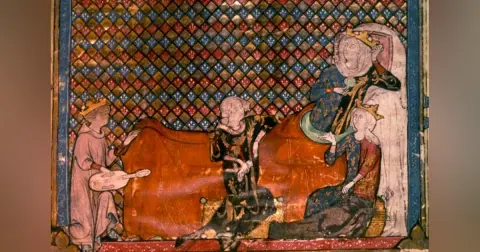


Occitania: the land of courtly love, sun and poetry, before its ruin.
There is, in the south of France, a great memory of antiquity: Marseille is a Roman city, Aix is built with Roman stones, and the singularly opinionated genius of the Provençal has preserved something Roman and ancient. Yet, beneath this apparent dust of ancient genius, another genius also percolates, more original, freer in its allurements, bolder, more unleashed. This is no longer the regular beauty of antiquity, cold and naked like a statue of Minerva, it is something dancing, loose and voluptuous.
-Gustave Flaubert
Let us turn to one of France’s most beautiful regions: Occitania. Occitania is the name of that region of France where the people speak the langues d’oc, so-named because the Occitan word for ‘yes’ was ‘oc.’ The langues d’oc stood in contrast to the north which spoke langues d'oïl , where the word for ‘yes’ was ‘oïl, ’ which became ‘oui.’ Occitania roughly corresponds to the modern French term Le Midi, which, despite its literal translation meaning ‘half,’ refers to the southern third of the country. This was the land of sunny beaches, rocky coasts, and rustic villas. Troubadours traveled the old Roman roads singing songs and reciting poetry about courtly love.
This episode and the next several in our main series will cover Occitania’s heartland, a region which roughly corresponds to the medieval province of Languedoc. To the south was the Golfe de Lion, which held the majority of France’s Mediterranean coast. This area stretched to the Rhône River, across which lay Provence, a region which was a part of Occitania but had its own unique political development separate from the corelands. Its western border lay somewhere along the Garonne River’s western bank. Depending on the year, the mighty Counts of Toulouse took territory on the other side of the river. However, they never conquered too deeply as they alternately faced the Dukes of Gascony and Aquitaine, who at times were one and the same person. Occitania’s northern borders are less well defined as they lay within the Massif Central, an enormous territory filled with mountains, hills and sudden plateaus. Countless tiny villages dotted the Massif Central, most of which were within Occitania’s cultural orbit, though the terrain was such that few large cities developed there and major trade routes ran around rather than through the area. When northern medieval knights traveled south they traversed the Rhône Valley in the east or the Aquitaine Basin to the west and then swung toward the center. Even today, France’s fastest trains, the TGV, don’t have a direct line from Paris to the center-south but swing around through Lyon and Bordeaux.
This area was the heartland of Occitania. Along its southern coasts lay many historic cities with their roots in the Roman Empire or even older. Cities like Marseille, Montpellier and Narbonne grew rich by controlling the trade routes from the Mediterranean to the southern hinterlands. The richest and most powerful of all was Toulouse. From its position on the Garonne, the Counts of Toulouse stood halfway between Bordeaux and the Atlantic Ocean to the west, and the Mediterranean Coast to the southeast.
What separated the heartland of Occitania from Provence, Gascony and the Duchy of Aquitaine, which was much larger during this period, was its political fragmentation. While each of the former territories had powerful counts and dukes, this region had many competing lords who vied for power, wealth and glory. The Counts of Toulouse stood at the forefront of this competition, but this spurred most of the other lords to form anti-Toulouse coalitions. These were often led by the scions of House Trencavel, who ruled over the gigantic fortress of Carcassonne, and the important city of Béziers. This picturesque part of medieval France saw remarkable growth and development until the onset of the Albigensian Crusade, which utterly devastated Occitania’s heart.
Chapter 1: The Path Not Taken
Why was the Languedoc united to northern France, a union that neither language, nor race, nor history, nor the character of the populations called for?
-Ernest Renan
Many French statesmen and conquerors have talked about France’s ‘natural borders.’ Their general argument is that the Pyrenees, Alps, Rhine River and the coasts form geographic boundaries that define the French nation. This is a silly argument, as France has always extended beyond these ‘natural boundaries.’ French domination of the Channel Islands, Flanders, Corsica, Guadeloupe and a number of other territories lost or retained show that when it comes to humans there are no absolute borders. Just as there are no hard rules containing France there are also no laws which define what France is. The most striking example of this is medieval Occitania, a territory so distinct from the north it is sometimes difficult to imagine how the two formed one country.
Powerful magnates dominated the North, primarily the King of France, Duke of Normandy, Count of Anjou and various other powerful lords. In stark contrast, in the heartland of Occitania no lord exercised as much power over comparable swathes of territory, nor was their power so absolute within their own lands, except occasionally the House of Toulouse. The rise of a powerful merchant class which allied itself with the church posed a significant counterbalance to the aristocracy in the late 12th century. Communes developed across major cities as the bonhommes, ‘goodmen,’ shared power with the ruling lords.
In the north, ruling houses imposed their will over their inferiors, creating a political and economic system of vassalage and manorialism. Every man had a master: the lowliest peasant owed labor to his baron who owed military service to his viscount who owed service to the count who owed service to the king. Vassalage was near-universal across Europe at this time, as the practice of a truly free person with no obligations was largely a modern concept. Yet, in Occitania, the system that connected people was as loose-fitting as the clothing they wore. After the ravages of Viking raids and plunder by mudahim from Al-Andalus, petty Southern lords and bishops offered undeveloped lands to peasants to cultivate. Thus, serfdom all but disappeared in the South as common folk became free farmers. Nobles often loaned land and castles to each other as they developed marriage alliances and charged each other for those lands. However, these charges were merely ceremonial and used to bond houses to each other. Everyone in France had a master, but Southerners tended not to use the rod as much as their northern cousins.
Medieval Occitania was far more connected to Iberia and Italy than northern France. Far from a divider, the Mediterranean was an open highway connecting the County of Barcelona in the west and Genoa, Pisa and other Italian city-states in the east. The languages of these three regions developed alongside each other and were largely comprehensible given their proximity to Vulgar Latin and in stark contrast to northern French which was more Germanic. The Southerners shared common cultural norms. The south developed fin’amor, ‘courtly love,’ as troubadours sang about ladies and romance. In stark contrast, the north was developing chivalry, and their largest social events were often tournaments in which knights fought their fellows. While tournaments became a mainstay in the north, there were almost none in the South.
So many differences existed between the north and south that people from both regions viewed the other as strange. Northerners used the Salic Law as the basis for their legal system, whereas Southerners built upon old Roman law codes. In practical terms, this meant that Northern law attempted to reconcile individuals to prevent blood feuds while Southern law theoretically attempted to standardize a system of justice. In practice the north and south had many similarities; in both regions cases were primarily decided by ad hoc gatherings of nobles or respected members of society, not impartial and permanent courts.
Northern and Southern French could be easily distinguished from each other by their dress. In the colder north, nobles wore layers of clothing, comprised of wool breeches, tunics and cloaks, sometimes trimmed with fur. Their clothes generally had high necklines and women covered their hair with a veil or a wimple, a headdress that covered everything but the face. Southerners dressed for the warmth and wore light fabrics that draped over their forms and which sported long open sleeves. The richest among them bought silk vestments made in Byzantium or the Islamic lands.
North and South couldn’t even agree on facial hair! Before the 11th century, Franks tended to grow out long mustaches while Southerners preferred to be clean-shaven. By the 11th century the North and South flipped their preferences. Northern men shaved their beards and cut their hair short while Southern men let their beards and hair grow out. Northern women kept their hair fully covered under their wimples. In stark contrast, Southern women often wore loose veils and sheer linens which at least partially revealed their hair, which they elaborately decorated with braids, ribbons or gold-thread cords.
Whenever North and South met there was an uproar. One source recounts:
“Towards the year 1000 of the Word Incarnate, when King Robert took Queen Constance of the region of Aquitaine to wife, thanks to that same queen there was an influx of men of the vainest frivolity into France and Burgundy from Auvergne and Aquitaine. Depraved in their customs and dress, with a hotch-potch of armour and horse-trappings, they shaved their hair half-way to the back of their heads, went beardless like jongleurs, wore the most revolting boots and leggings, and were totally lacking in the least rule of faith or peace. And so, alas, the whole people of France, not long ago the most decent of all, along with the Burgundians, seized avidly upon their abominable example, so that eventually everyone came to conform to their wicked and disgraceful behavior.”
Northerners were not used to an outspoken woman. Conservative moralists balked at the troubadour poets with their songs about romance rather than praising God, decried the loose-fitting clothing of the Southern nobility and the visible hair of their women. Northerners also disliked how Southern fashion was influenced by Mediterranean styles, which they viewed as immoral or devious, particularly with its Islamic influences. Southerners in turn, viewed Northerners as cold, stuffy, and overly violent. Simultaneously, Southern men tended to view their Northern counterparts as effeminate due to their habit of cutting their beards.
Even their coinage was different. In the north the great magnates consolidated their power by holding a monopoly on mints. Lack of political centralization in Occitania created a confusing array of varied coinage as local lords minted their own and merchants brought in foreign specie. Don’t think the South was poorer for this; on the contrary, in the 12th century the phrase “gold of Montpellier,” came to mean fabulous wealth. While Montpellier’s coins were the most widespread among local mints, the most popular coins in Occitania actually came from Sicily and Byzantium. Added to this were gold coins from Al-Andalus, called morabitani after the Almoravids. Far more trade occurred between Occitania and the Mediterranean than between North and South, with very few Southern coins making their way to France’s upper territories.
With so many differences between the North and South it is worth asking how they formed one country. The answer is history. Ever since Clovis I conquered what became France, Paris-based rulers decreed that the south was a part of their kingdom. French monarchs backed these pronouncements with force, either defending the south from foreign invaders, such as at the Battle of Poitiers, or invading the south to suppress its people, as in the case of the Albigensian Crusade. Royal power hit a nadir under the late Carolingians and early Capetians, yet Southern lords did not attempt to create their own country. If anything, they tended to like weak kings as it meant they could do as they wished so long as they nominally recognized the monarch in Paris in their charters.
Let’s pick up the story in the 10th century and move forward chronologically. During this time northern politics was dominated by the Carolingian-Capetian rivalry. In the south there was another feud, this one between the House of Toulouse and coalitions of neighboring lords. At this time, the House of Toulouse ruled an area known as the Toulousain, a territory of over a hundred villages and towns all under the power of the central city. The mighty counts of Toulouse looked out from the windows of their villas and watched Occitania fall into chaos. The Carolingian House was on the point of collapse as its few remaining members were weak and under constant attack from the Robertians, a family that later founded House Capet. Provence was a mess; Muslim raiders pillaged from their base at Fraxinetum while the so-called ‘Kingdom of Provence’ was weak and unstable. With all the nearby powers falling apart, what better time to don a helmet, ride out and conquer?
The Counts of Toulouse struck northward into the Limousin and Auvergne. In this same period they also sought to extend their control south over Carcassonne and Narbonne. These ambitions created a miniature civil war in Occitania as aristocratic families joined with Toulouse or the anti-Toulouse coalitions. During the conflict both sides attempted to appeal to the king in the north. However, the Frankish throne was a musical chair between the years 888 and 987, passing back and forth between the Carolingians and Robertians, with the odd Bosonid ruling over a decade. Each time a Northern king endorsed the Counts of Toulouse or their enemies it encouraged Southern lords to join that faction, but moral support from a weak monarch did not play a decisive role one way or another. French kings’ greatest influence over the south for a long time was their role in appointing bishops to Southern sees. Yet, by the time Hugues Capet came to power the monarchy had lost all direct influence over the south.
In the mid-10th century Guillaume IV Fier-à-Bras, that is ‘proud arm,’ became the leader of the House of Poitiers. Proud-arm was one of the most fearless and cunning rulers of late Francia. After subduing Poitou he seized control of Aquitaine, becoming its duke. From there he conquered eastward until the enlarged Duchy of Aquitaine stretched all the way across the kingdom, only ending at the borders of the Holy Roman Empire around Burgundy and the Swiss Alps. Proud-arm even went to war with Hugues Capet, besting him in combat and securing his domination of the middle of France.
Aquitaine’s victory was Toulouse’s defeat. Their northern ambitions were stymied and instead of becoming a great magnate like those in the north, the counts of Toulouse became just one of many regional lords in Occitania. From the late-10th century to the Albigensian Crusade, the Occitanian heartland had no central ruler, and its politics were defined by three main conflicts: first, Toulouse would attempt to expand its power south and east, prompting an anti-Toulouse coalition to emerge. Second, petty lords warred with each other for minor territory. Third, just as in Provence, the church and rising bourgeoisie united to seize power from the nobility, a movement which ultimately resulted in the formation of local governments known as communes.
Toulouse’s defeat was not the only reason why Languedoc did not have a domineering lord. Southern law and culture also discouraged centralized power. In the South ruling houses replaced professional government positions, such as the honores, with their own family members. While putting family in charge of business and politics was common across France, the North had a more developed civil service, particularly in Normandy whose bailiff system became a model for England and then France. Another thing that curtailed individuals’ power were the inheritance laws. Primogeniture, the practice of giving all land and titles to the eldest son, was forbidden in Occitania. A lord’s holdings were divided among younger sons, and if these men treated their brothers the way brothers usually treat each other, then the family would break apart.
Another problem that Southern lords faced when trying to expand their house’s power was the role of women. I am no hater, and I certainly won’t knock any sister trying to make it in a harsh world. However, the fact that Southern women could inherit land proved disastrous for male lords. When a lady became a widow she often returned her land to her own family, rather than keeping it in her husband’s. This was vastly different than in the north, where women could exercise great power over land but only as temporary replacements for husbands while they were at war or as regents for their sons. For all these reasons, land, the bedrock of medieval politics, economy and society, constantly changed hands, creating too much instability for any one person or family to acquire overwhelming power.
Another issue that inhibited a house from dominating the south involved legal landownership. The type of land that defined the south was highly different than in the north. Feudalism dominated the north. The great magnates owned land which they doled out to their lessers as fiefs in exchange for military service. In the south nearly all land was allodial by the 12th century. These tax-free, duty-free lands carried with them no obligations for their owners to serve any other lord. Despite this, there were a complex series of land contracts which tied the seller and buyer together. These included ceremonial fees or the hiring of knights to look after a castle on another lord’s behalf. Interpersonal ties were just as present in the south as the north, but the legal bonds of fealty were not nearly as strong. These economic and political structures weakened the power of the high nobility. Instead, hundreds of petty tyrants terrorized Occitania in the 12th century.
Chapter 2: Mandamenta
Small streams make great rivers.
-Occitan Proverb
The best swimmers often drown.
-Occitan Proverb
Modern culture has romanticized castles as beautiful mansions where lords and ladies held feasts and listened to minstrels sing while armed soldiers gallantly defended the land from atop the crenellations. Most people living during the time castles were constructed did not hold the same views. Commoners viewed these structures as symbols of oppression. These stone edifices scarred otherwise pristine land. Inside their walls were violent men waiting for the opportunity to steal from the defenseless and even kill for their own amusement. Villages which rested in the shadow of one castle could theoretically depend upon its garrison to defend them from raids or invasion from enemies. Yet, in the ever-mercurial politics of Occitania, loyalties changed frequently. Castle garrisons were sometimes no better than deputized brigands who would leap at the opportunity to seize what was closest to them. Medieval peasants perpetually lived on the edge of ruin. A marauding band taking what little wealth a village had could mean destitution or death for the villagers.
Women were the most immediate victims of these ruthless men. Sexual violence was a little-discussed though ever-present phenomenon in the medieval period. In the 12th century, André le Chapelain, a member of Louis VII’s court authored the book, De Amore. Often mistranslated as ‘The Art of Courtly Love,’ De Amore may have actually been a satiric critique of medieval society. In the book, André writes that a noble must take great pains to woo a lady. However, he says that, “If you should happen to fall in love with [some peasant woman], take care to puff her up with lots of praise and then, when you find a convenient place, do not hesitate to take what you seek and to embrace [her] by force.”
Knightly violence was a problem throughout medieval Europe, though it appears that southern France was worse off than most. At the very least, northern France boasted great magnates who ruled over their barons with an iron fist. In contrast, southern leaders were never as strong as their northern counterparts, something which opened the door to rampant abuses by castellans and their soldiers.
The war between the Carolingians and Robertians dominated northern Frankish politics, where most of the fighting occurred. Yet, despite being relatively unscathed, this conflict had a dramatic impact on the south. Royal authority diminished as both sides fought for control of Paris and other great cities. Monarchical power all but vanished in Occitania. Without a king to keep the peace lords could pillage each other’s lands without interference from any greater power. Furthermore, there was no authority figure present to tell Southerners they were not allowed to build fortresses wherever they wanted. Thus, Occitania experienced a castle-building boom. Over a hundred new castles sprang up within a century as each noble house sought to protect their own territory and advance into another’s.
What made matters so much worse for the Occitanians was that the lords often had little control over the castles they built. Noble houses built castles like mad as they sought to dominate territory only for tragedy to whittle down their own numbers. The spread of plague, a hunting accident, death in battle or some other calamity could easily deprive a noble house of much-needed men to defend their holdings. What would these shrunken houses do with a castle they could not occupy? These lords turned to even pettier nobles and offered the castles to them on conditions. Unlike the north, where strong feudal ties ensured loyalty, the Roman-based Southern laws prioritized allodial land, wherein the tenant usually owned the allod. As such, Southern nobles negotiated contracts, giving away land in exchange for services and recognition of a lord’s prerogatives. These contracts established castellans as fidelis, men who owed fealty to their masters. However, Southerners were fidelis without a fief, a fief being land which a vassal held on behalf of his overlord. This created a very obvious problem for the overlords. Southern castellans signed contracts agreeing to serve greater lords, but Southerners did not manage land on behalf of their overlords; they owned the land outright. Since overlords could not legally seize land from a disobedient castellan the entire mechanism that underpinned feudalism was largely absent in the south. In Occitania whoever owned a castle was its king, and this age witnessed hundreds of ragtag despots each ruling over their own mandamenta, that is whatever nearby territory they could dominate through sheer force.
While political authority reached a low point in the south the church grew more powerful and organized during this time. By the mid-10th century the Vatican emerged from a period of incredible corruption known as Saeculum obscurum in Latin, though historians refer to it alternatively as The Rule of the Harlots or the Pornocracy. Yes, ‘pornocracy,’ you just learned a new word, but one which you will not be able to naturally fit into any conversation, ever. This period, one of the lowest points in papal history, ended with the declining influence of a corrupt noble family in Rome and an increasingly independent papacy. Leo VIII and subsequent popes created an effective and efficient hierarchy which culminated in the Gregorian Reforms of the latter 11th century. This reinvigorated church was thus capable of supporting a peace movement aimed at curtailing the constant violence in the south. When diabolical knights despoiled church lands this gave religious figures the spark that they needed to act.
In 975 Boson, count of Périgord and La Marche assaulted the castle of La Brosse, held by Géraud I viscount of Limoges. Violence spilled over into the nearby lands held by the monastery of Saint-Benoit-du-Sault. Géraud I repulsed Boson’s forces at which point Boson renewed his offensive elsewhere. In the process, his son Elias seized the bishop of Limoges and stabbed out his eyes. Géraud I’s son then captured Elias and sent emissaries to the powerful Duke of Aquitaine, Guillaume IV, asking for permission to blind Elias in retribution. Guillaume IV granted his request, but Elias escaped. His punishment was passed on to Boson’s third son, whose eyes were removed.
Following this absurd display of ‘eye-for-an-eye’ justice, Guy II, bishop and count of Le Puy, called a meeting of local lords and asked them to take an oath to keep the peace. The Duke of Aquitaine supported the peace as a way of curtailing the violent tendencies of his vassals. Caught between throne and altar, Boson and Géraud Isponsored churches in each other’s territory and agreed to respect their lands and right to hold their own elections without interference. Violation of church sanctity warranted damnation. Géraud I freed Aldebert, one of Boson’s sons, from prison and the young man married his captor’s daughter to seal the peace. The peace established in 975 was not a general peace but an agreement between a few lords which established marital, religious and economic ties between two families. Yet, this practice set an important precedent of church leaders establishing peace between nobles and addressing their own grievances and those of peasants.
In 989 the Archbishop of Bordeaux summoned bishops across the south to Charroux in the middle-south of the country. On the 1 June at the Council of Charroux they declared a whole new code of conduct for knights, which they dubbed ‘The Peace of God.’ The bishops agreed that churches were sanctuaries and could not be entered without the permission of the priest, that soldiers could not “steal from peasants or the poor,” and finally, those who assaulted unarmed clerics would be excommunicated [Bradbury]. Bishops put aside their secular differences and agreed to uniformly excommunicate anyone who violated the Peace of God, an incredible display of clerical solidarity. Southern lords joined the movement to keep their ambitious vassals in line. Finally, the common people and the rising bourgeoisie also supported the movement as it curtailed the knights’ powers. Because of this support, at a 994 assembly at Le Puy, bishops expanded protections to include merchants.
The Peace of God movement was a remarkable phenomenon, one which I covered in more detail in an earlier episode. It was one of the most important peace campaigns in pre-modern history. Robert II, the King of France and the Holy Roman Emperor Heinrich II even endorsed the movement. The ideals its leaders championed certainly played a role in later concepts of chivalry. However, the movement was never intended to promote true pacifism, but to channel young men’s violent tendencies against the enemies of the church. The Crusades became the ultimate fulfillment of The Peace of God movement as the church successfully sent warmongering knights away from their own lands and to the Middle East to kill non-Christians. It’s worth remembering here that the single largest army in the First Crusade was led by Raymond of Toulouse. Occitania had many armed men with too much testosterone and nothing better to do than bash skulls and The Peace of God movement and the Crusades was society’s answer to their era’s male loneliness epidemic
An important facet of The Peace of God movement was how it further unified and strengthened the Occitan church. At this time the church regained its confidence and made moves to secure its position in Occitania. Bishops constructed their own castles and allied with the bourgeoisie to counter the aristocracy’s power. Over the next several centuries the church cracked down on simony, further weakening the nobility’s control over them. During this time Cluny Abbey flowered and spread its influence south. Churches and monasteries blossomed during this era. Priests traveled up from Catalonia and west from Provence and even Italy, as a Western Mediterranean Christian culture developed, stretching from Barcelona to Pisa.
This Western Mediterranean Christian culture blurred political and cultural boundaries. Aristocrats intermarried across the region, sharing particular intercourse with the northeastern Spanish. Following the disastrous Sack of Barcelona in 985, the city and county rose from the ashes like a phoenix, becoming one of the major players in the region. Intermarriage into the House of Provence saw the creation of a Catalan-Provençal union and accompanying opposition from the Counts of Toulouse. Scholars from Italy traveled to Southern French courts who responded in kind by sending their own enlightened figures to the peninsula; one grand prior of Cluny even ascended to the papacy, becoming the influential Pope Urban II.
Occitania experienced something of a golden age in the 11th and 12th centuries. Shielded from the Islamic states in Spain by the Pyrenees, the Holy Roman Empire by the Alps mountains and the northern French lords by the Central Massif, Occitania became great. Montpellier, Toulouse and Narbonne were likely the three largest cities in France, behind only Paris and Rouen. Wealthy Occitanians used Andalusian gold coins to purchase silks, spices and ivory from merchants arriving from North Africa, West Asia and Byzantium carrying goods from even farther abroad.
Thus did Occitania flourish, though it did so as a region defined by language and culture, not by politics. Only the counts of Toulouse had the potential to unify Occitania, though they ultimately failed since the other lords unified to oppose them. Aside from lesser lords, Toulouse had to worry about invasion from the Dukes of Aquitaine. Around 1094 Guillaume IX, Duke of Aquitaine, married Filipà of Toulouse. Ever afterward the House of Poitiers claimed the right to rule the city. Guillaume IX even dared to attack and capture Toulouse in 1098 while its count was away on Crusade, though he had to surrender the territory under threat of excommunication. As such, Toulouse would become the bully of Occitania, regularly taking advantage of neighboring viscounties without ever fully subduing the region.
A land of sun, freedom, learning and love, Occitania was an exceptional place until the catastrophe that was the Albigensian Crusade. When the Northern nobles invaded they did not just stamp out a heretic religion; they also crushed much of what had made Occitania so unique and successful.
Epilogue:
The spirit of Occitan civilization in the twelfth century, as we can see, responds to aspirations that have not disappeared and that we must not let disappear.
-Simone Weil
Occitania has long been in conflict with France. Part of France’s nation-building project rested on destroying an Occitan identity and replacing it with a French one. This process was never easy; as late as 1860 an estimated 39% of French citizens spoke Occitan as their mother tongue, compared to 52% that spoke French. This led the government under education minister Jules Ferry to impose mandatory schooling in French. Across the south were signs telling students to ‘be proper, speak French.’ Children were punished if they spoke their own language. Teachers told pupils not to spit and not to speak Occitan. This process, known as vergonha, ‘shaming,’ did its job. Today, less than 1% of French speak Occitan.
Still, Occitania as a concept has not died. There are libraries dedicated to Occitan literature and keeping the language alive. Likewise, a unique, Mediterranean culture exists in the south. However, while we may have a concept of Occitania today, it is worth asking: did the people who lived in medieval Occitania consider themselves to be Occitan, French or something else?
If we look at contemporary texts, we can see that people drew clear distinctions between the northern and southern languages. Occitan chroniclers referred to French as the langue du roi and parladura Francesca. Meanwhile they referred to their own speech as roman and lemosi. Likewise, Italian scholars divided French between proensal, oco, oïl and occitan. The poet Dante Alighieri simplified the differences based on how a person said ‘yes.’ French was oïl, Occitan was ‘oc’ while Spanish and Italian were the ‘si’ languages.
The records also confirm that Northern and Southern French viewed themselves as a separate but connected people. For a long time, Northern chroniclers called their own people ‘Franks,’ while Southerners were called ‘Provençals.’ Other sources refer to Southerners as ‘Catalans,’ given the influence of the County of Barcelona and the similar culture. Across France there was a general agreement that Southerners were distinct, but no one could quite agree on what they were. Northerners tended to distinguish Southerners by the county they came from, not from Occitania as a whole. Likewise, the consistent mingling of Spanish, Italians and Basques in Occitania meant there was a fluidity to the language and culture of the region. Thus, a clear Occitan identity only emerged in the 13th century, following the destruction of the Albigensian Crusade.
Sources:
Jim Bradbury, The Capetians: Kings of France 987-1328, 2007.
Daniel F. Callahan, “The Peace of God and the Cult of the Saints in Aquitaine in the Tenth and Eleventh Centuries,” Historical Reflections/Réflexions Historiques, Fall 1987, Vol. 14, No. 3 (Fall 1987), pp. 445-466.
Thomas Head, “The Development of the Peace of God in Aquitaine (970-1005),” 1999.
“Peace of God: Pax Dei” by Richard Landes. Website here. Accessed 22/3/2022.
Ed. Linda Paterson, Culture and Society in Medieval Occitania, 2011.
Kathryn L. Reyerson, Business, Banking and Finance in Medieval Montpellier, 1985