91: Occitan Society
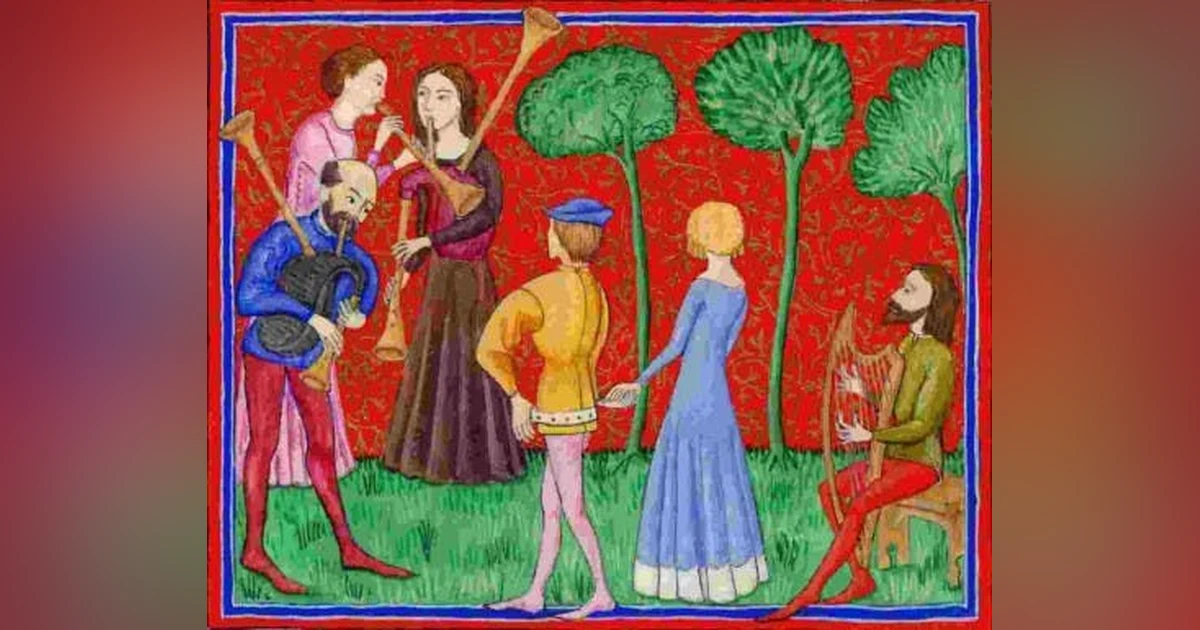


All about life in sunny Occitania before the Albigensian Crusade.
Life in medieval Occitania was both strikingly similar to and wildly different from life in the north, depending on what we choose to emphasize. Roughly 90% of people in both places were subsistence farmers, eking out a living from tilling the earth. The Three Estates dominated society. Castle construction across France was largely in the Norman style, though rounded towers became more common following the success of the Louvre. Yet, the south contained traces of uniqueness in every facet of life.
The most noticeable difference between north and south was their cuisine. In an era before refrigeration and efficient transportation all food was local, save only those items that could be preserved for extended periods, which were more expensive and thus largely reserved for elites. One huge ramification of climate difference was the Great Fat Divide between the North and South. In northern France, people primarily got their fat from animal products, such as meat, butter and lard. While southerners also raised cattle, chickens, goats and pigs, they got a significant amount of their fat from olive oil and nut oil. Similar to Italians and Greeks, those French who lived close to the Mediterranean liberally used natural oils to season their food.
In addition to the Great Fat Divide was the Great Alcohol Divide. Southern France’s long growing season, warmer climate and the rarity of sudden freezes made it ideal for producing grapes. Occitanians pressed these grapes into wine, with the finer vintages going to the rich while the poor drank those of secondary quality. Though, I imagine the cheap wine was still good, as I reminisce on my days back in Béziers in 2011 when I could buy a bottle of wine for just €2 at Lidl. It was a different time. Then again, I am not a wino, and most Occitanians who worked the fields could tell the difference. Monasteries and villas took extensive notes on which locations had the best soil to produce the finest grapes. The best grapes were so delicate that when they were collected in large containers their skins split through sheer weight alone. This free-run wine produced the purest and sweetest juice, producing vintages reserved for elites. If a commoner splurged on it, these fine wines were only drunk on important feast days. In contrast, most wine came from the press, which was lower quality. As in most things, the wealthy got the first taste while commoners settled for the second.
Northern France had wine-growing regions, but their wines were generally lower-quality. The world was colder than it is today and northern grapes suffered for it. However, northern France was well-suited to growing barley, rye, oats, wheat and apples. Using these, northerners produced beer, ale and cider, which poor and rich alike drank, though the rich also imbibed wine. As in the south, elites got the best alcohol because they got the first taste. Brewers developed a technique known as parti-gyle, whereby they made multiple extractions of alcohol from the same grains. In this process, brewers soaked crushed grain in hot water, warming up their natural sugars and inviting yeast which fermented into alcohol. This first extraction produced the strongest beer and was more expensive. This first-batch beer was the type served to nobles or to commoners on very special occasions. Once the first batch was done brewers replaced the water and soaked the grains again, repeating the process. At this point, very little sugar remained and the beer was of far lesser quality and alcohol content, being around 1%-4% in today’s measuring. This was the sort of beer commoners drank throughout the day, which gave them a light buzz, dulled the pain and soreness from labor and made life a little more bearable. Sometimes, brewers performed a third extraction, though by this point barely any usable sugar was left and this last squeeze was reserved for the lowliest of laborers.
During this time, alcohol was not just for revelries, it was a universal culture. While not French, I have to mention that the Irish Gaelic word ‘whisky’ means ‘water of life.’ Contrary to any stereotypes of Irish or others being rampant alcoholics, the reason why our ancestors constantly drank alcohol was because this was the best way to store calories. Most foods did not keep for long as mold, bugs and rodents ate away at what little people possessed. Since commoners did not have the same quality of containers as the rich their stores were far more likely to become corrupted. In contrast, alcohol naturally killed bacteria, meaning it could be safely stored for long periods, even if its overall quality went down over time, depending on the drink. Alcoholic beverages thus became a staple for common laborers, who drank them on a daily basis.
Meat was a rare treat for peasants, though nobles regularly had their share. The aristocracy claimed the unique right to forests and the right to hunt therein. Hunting became a favorite pastime of European lords whose hunting parties could include hundreds of their peers and vassals. Commoners were forbidden to hunt on noble lands, sometimes on pain of death. As a result, nobles regularly ate game, such as deer, hares, pheasants and quail. These game meats supplemented the domestic meat taken from pigs, cows, sheep, goats and chickens. Meat consumption was largely similar across regions, though Occitania had rabbit farms as well.
While each side had their differences, there were a few universals: vegetables, nuts and pigs. Many vegetables such as onions, carrots and beans grew across the regions and supplemented nearly every meal. Nuts were valuable since they did not spoil easily and could be grown across climates. Pigs were a near-universal part of the European diet for reasons that should be obvious to anyone who grew up near farms. Domesticated pigs are essentially walking bags of meat. Moreover, pig meat is high in fat. Though we tend to avoid fat today, peasants who worked from sunup to sundown could eat pig meat regularly and still be thin from all their work. Perhaps the best thing about pigs was that they ate anything, including leftover food, roots and other items unsuitable for humans. It’s no wonder that Middle Easterners viewed pigs as unclean animals and banned their consumption. Jews and Muslims could do this without major consequence since the Middle East is too hot for pigs, but most of Europe is ideal for them. Unclean or not, pigs were too essential not to be part of a French person’s diet.
Fish were also common across biomes, though what type was very different. In the cold Atlantic waters, Normans and Bretons ate cod, herring and eel. Those more inland ate roach (the fish, not the bug), trout, pike and carp, all of which were preserved with heavy amounts of salt. Meanwhile, those along the warm Mediterranean ate seabass, bream, sardines and anchovies. Fish were less commonly eaten than terrestrial meats but were regular fixtures on Fridays and during Lent due to Catholic prohibitions.
As far as food preparation was concerned, you would probably be better off in Occitania. Mediterranean ports brought in spices from abroad, flavoring their dishes. Most commoners could not afford spices and so they spiced up their food with garlic. Occitanians were in close contact with Iberia and Italy, both places known for their good food. In contrast, Northerners had far less access to spices or other exotic foods, though aristocrats could afford the extra fees associated with travel of spices from the Mediterranean up the Rhône River. However, what northerners lacked in spices they made up for in sauces. These were often based on wine, verjuice and of course, mustard. There’s a reason why Dijon became the center of France’s mustard industry and is famous across the world. Add to this the many spices available in the north, such as thyme, parsley and rosemary and northerners held their own in the kitchen.
One fascinating aspect about pre-modern cooking is that people did not neatly divide types of meals like we do today. Notably, pre-modern peoples often mixed sweet with savory. Aristocrats across France enjoyed dishes and sauces which used both sugar and spices, and meat with dried fruit. While most of these recipes come from the late medieval period, it is likely that the precursors to this practice already existed and were reinforced through contact with the Islamic world. Muslims in Iberia often ate sweet and savory foods together, creating dishes such as lamb with apricots, tagines with raisins and chicken with almonds and cinnamon. All this is to say that medieval French people would not be appalled at pineapple on pizza like so many sensitive modern people.
Cooking and eating were both communal affairs during this time. The same fire that could make one meal could make a dozen or more, and people were loathe to waste firewood. Cooks working for nobles prepared food for the entire household, servants included. In contrast, commoners gathered around a communal oven or hearth and made food for one or multiple families. When the food was ready, people piled it onto plates, though the poorest sometimes ate right off the table. Commoners had to share knives and cups. The fork was becoming more common in Italy during this time, but remained absent from France. Instead, French people stuck with the knife, spoon and their hands.
Among elites, women were expected to eat separately from men and then join the men’s table after they had finished. Eating was considered a messy affair at this time and women were expected to be constantly clean. If women did eat alongside men, such as at festivals, it was considered proper for them to eat clean foods and only in small portions while the men engorged themselves with greasy meat.
Poor city-dwellers had to share a community oven or hearth, or buy food from vendors. Vendors could either cook up whatever food the urbanites brought to them or sell them food directly. Not quite a restaurant, these fast-food joints were notoriously low-quality and a routine target of scorn in the literature of the time. Still, people had to eat, and those in big cities made due with whatever was nearby.
In summation, an Occitanian and north French plate looked very different from each other. An Occitanian meal would be made up of wheat-based bread, olive oil, vegetables and Mediterranean fruits such as figs and pomegranates, supplemented with the occasional meat. If that doesn’t sound appealing, perhaps you might like a northern dish, which would have porridge or gruel made from rye, wheat or oats which were served alongside butter, lard, apples and pears and likely a bit of pig or fish.
Let me answer the question that is probably on all of your minds: who were healthier? Given their varied diets it is natural to assume that either Northerners or Southerners lived longer, healthier lives. I bet most people would say Occitanians were healthier, given that nowadays southern Europeans have some of the longest life expectancies in the world and doctors constantly recommend the fruit and veggie-heavy Mediterranean diet. As it turns out, there wasn’t much of a difference across regions. The reason for this is that most food-related health problems develop in a person’s thirties or later; it’s only then that all that junk food finally overcomes your metabolism and you have to start worrying about your cholesterol and cardiovascular diseases. Sad to say, but most human beings did not end up living long enough for unhealthy diets to have much of an effect. More often, people died from war, disease or famine. Furthermore, while northerners may have eaten more fat, most people had to labor from sun-up to sundown. Even nobles were not spared, as they had to train for war and practice horsemanship. Obesity was rare, even among the elite. What a person ate did not matter so much as whether they got enough to eat.
Now that we’re all hungry, let’s move from food to broader culture. If there was one single figure that typified the medieval period it was the knight. In French the word is chevalier, meaning horseman, since this class was wealthy enough to own their own horses. Knights, with their high-quality armor and weapons stood in stark contrast to common foot soldiers who often fought with second-hand or impromptu gear. Knights were also professional soldiers whose daily work included drills and maintaining their weaponry and armor. Meanwhile most soldiers at this time were villagers and townsfolk who were required to train for their respective militias. As such, knights were vastly superior to part-time soldiers.
Despite our rosy image of them in fantasy stories, knights were often more of a plague on the land than a help. Knights were fairly young to middle-aged men whose profession was killing people and they acted just as you’d expect. One of the biggest problems of the medieval period was turning knights towards something productive for society, rather than self-destructive. The church continuously tried to send knights abroad to Iberia and the Byzantine Empire to defend Christendom, in part because they wanted to shrink the population of horny, violent and armed men in their territories. This process ultimately culminated in the Crusades.
Northern France and Occitania both solved their young male problem by reforming knights, albeit in very different ways. Around 1180 the north developed chivalry, a word taken directly from chevalier. Chivalry was a code of conduct for knights, which included caring for the sick, the poor and the downtrodden. Thus, knights were expected to maintain Christian virtues, abstaining from unnecessary violence. Additionally, northern French elevated each aspect of the knightly profession until it became a lifestyle and a source of pride, rather than just an occupation. Knighting became an important ceremony denoting honor and acceptance into a prestigious order.
Tournaments became regular entertainment. Deriving from the Old French word, torneier, which means to spin around, as horsemen did during a joust, tournaments became commonly known across Europe as the conflictus gallicus, the ‘Gallic Conflict.’ Here, knights could win glory and wealth by defeating their peers in martial contests.
Chivalry did not catch on in the south, at least not initially. Instead, knights increasingly were expected to be gentlemen, or courtiers. Troubadour songs idealized the dashing man who wooed ladies, enjoyed poetry and prized learning and all the finer things in life. If Northerners went to tournaments to win glory in combat, Occitanians went to court to gain women’s affections.
While tournaments were a northern phenomenon, festivals were widespread across Europe. Gatherings of large numbers of people in celebration could occur on set holidays or as ad hoc commemorations of a military victory, wedding or coronation. Provence was particularly a hotbed of festivals during the time of Anfos Jourdain II, who attempted to ingratiate himself with the locals through lavish parties.
One fascinating difference between the north and south was their opinion on professional medicine. Medicine at this time was bad. Very bad. The human body is one of the most complex things in the known universe. Medieval knowledge was limited and medieval tools were blunt. It was commonly said across France that if the disease did not kill you the physician would. This was not an exaggeration, particularly when it came to surgery. Let me just read out a text from the Arab author Usāmah ibn-Munqidh. In his book, he recounts a tale told to him by a Middle Eastern Christian physician who met up with a French physician involved in Crusade. The Middle Eastern Christian recounts:
They brought before me a knight in whose leg an abscess had grown; and a woman afflicted with imbecility. To the knight I applied a small poultice until the abscess opened and became well; and the woman I put on diet and made her humor wet. Then a Frankish physician came to them and said, “This man knows nothing about treating them.” He then said to the knight, “Which wouldst thou prefer, living with one leg or dying with two?” The latter replied, “Living with one leg.” The physician said, “Bring me a strong knight and a sharp ax.” A knight came with the ax. And I was standing by. Then the physician laid the leg of the patient on a block of wood and bade the knight strike his leg with the ax and chop it off at one blow. Accordingly he struck it – while I was looking on – one blow, but the leg was not severed. He dealt another blow, upon which the marrow of the leg flowed out and the patient died on the spot. He then examined the woman and said, “This is a woman in whose head there is a devil which has possessed her. Shave off her hair.” Accordingly they shaved it off and the woman began once more to eat their ordinary diet – garlic and mustard. Her imbecility took a turn for the worse. The physician then said, “The devil has penetrated through her head.” He therefore took a razor, made a deep cruciform incision on it, peeled off the skin at the middle of the incision until the bone of the skull was exposed and rubbed it with salt. The woman also expired instantly. Thereupon I asked them whether my services were needed any longer, and when they replied in the negative I returned home, having learned of their medicine what I knew not before.”
It’s no wonder northern French had low opinions of surgery when at this time surgeons cut, stabbed and bludgeoned people until they either died or got better, and they never got better.
In stark contrast, those in the south had much more appreciation for surgery. This is because they were connected to Italy which was then at the forefront of medical innovation. The most notable surgeon of the era was Rogerius of Salerno. Much like Plato made Socrates famous by recounting his lectures, Gui of Arles compiled Rogerius’ teachings into a book titled Practica Chirurgiae, “The Practice of Surgery.” This book was one of the most important pre-Renaissance medical texts and one which made surgeons more effective…to a degree. Occitanians adopted and added to Italian knowledge, with Montpellier in particular being a center for medical learning.
The social hierarchy of Occitania was medieval, though in a unique way. Unlike the North, manorialism and feudalism were much weaker. By the late 12th century serfdom had fallen out of practice, with perhaps only 10% of peasants legally tied to land which they did not own but had to work on behalf of a lord. So many lords had offered peasants ownership of land in exchange for cultivating their own that free labor became an expectation.
Yet, elites still found other ways to dominate society. First was through taxation. Members of the first two Estates did not pay taxes but commoners did. Free farmers working a lord’s land had to pay the cens tax, from which we get the word ‘census.’ Aside from taxes, elites controlled mills, bridges and roads and charged tolls for their use. Elites still ruled in Occitania but increasingly this was due to their domination of the economy rather than privilege.
Another way that elites ruled was through control of law and justice. Lacking a permanent, large-scale central government, political issues were often decided by ad hoc gatherings of notables. Notables usually included the patriarchs of noble families, ranking members of the clergy but also important men from the lower sort who were called bonhommes, in English ‘Goodmen.’ As cities developed communes these bonhommes increasingly supplanted the nobility’s role.
Justice at this time was not focused on upholding laws as much as it was mediating conflicts. Courts were often ad hoc assemblies with no real jurisdiction over aggrieved parties. Instead, noteworthy individuals attempted to pressure both sides into what they viewed as a fair arrangement that would prevent disruption of communal peace.
Following the defeat of Muslim forces at Fraxinetum, Occitania experienced significant economic growth. Peace meant more trade within France, to and from Italy and Iberia, including Islamic Iberia, and across the Mediterranean. Mints sprang up across Occitania with the most important being at Melgueil, which was under the control of Montpellier. Economic growth meant more bridges and cities flourished.
One of the most notable changes to Occitania during this time was the rise of the bourgeoisie. This urban merchant class grew considerably wealthy through trade across the Mediterranean. Occitan financiers looked to the rising Italian city-states, namely Genoa and Pisa, as inspiration. The Occitanians adopted Italian contracts between financier and shippers to raise funds and protect their assets. These included the commenda, wherein the financiers raised all the money for a ship and the purchasing of goods and in exchange they received three-quarters of the profits, the compagnia where everyone shared a risk, and the societas terrae wherein investors handled the risk but working partners did not get paid if the enterprise was unprofitable. The rising bourgeoisie played a crucial role in driving southern France’s economy. The biggest success story was Montpellier, which was founded in 985 and in less than two centuries became one of the south’s richest and most populous cities through its control of nearby ports.
When urban elites became powerful enough they declared the creation of a commune. This city government was dominated by wealthy commoners and usually excluded nobility from its ranks. While communes generally handled daily affairs in a city their actual power varied. In many cases the bishop or archbishop of a city was the real power. Conversely, the local lord may have been the real power, only delegating trivial affairs to the commune. Still, in other cases a commune’s power was absolute, as was the shocking case of Toulouse, which we will get to later.
Daily life in Occitania was noticeably different from that in the north in every conceivable manner. Food, clothes, economic and political cultures were all unique to each region. Without strong central governments, Southerners lacked the monumental buildings of the north, such as the Louvre and Notre Dame de Paris. Yet, their merchants were remarkably wealthy, drawing the envy of Northerners who spoke of uncountable riches as being akin to ‘all the gold in Montpellier.’ While Northern men reveled in military prowess and feats of martial glory, Southerners turned to romance and courtly love. While Northern state-building took the form of great lords consolidating their territory at the expense of their lessers, Southern state-building saw the rise of communes as the bourgeoisie asserted their power against the old nobility. In all of these respects, Occitania was developing much more like the Italian city-states than northern France. Perhaps in another world we would be speaking of the Republic of Toulouse and the County of Montpellier in the same way we speak of the Republic of Venice and the Duchy of Milan. Yet, this did not occur. Instead, Occitania’s unique development came to a violent end when Northerners brutally asserted their dominance with steel and fire.
Sources
Ed. Linda Paterson, Culture and Society in Medieval Occitania, 2011.
Usāmah ibn Munqidh, An Arab-Syrian gentleman and warrior in the period of the Crusades: memoirs of Usāmah ibn-Munqidh, trans. Philip K. Hitti, Princeton, N.J.: Princeton University Press, 1987.
Kathryn L. Reyerson, Business, Banking and Finance in Medieval Montpellier, 1985.
Terence Scully, The art of cookery in the Middle Ages, 1995.