93: The Republic of Toulouse
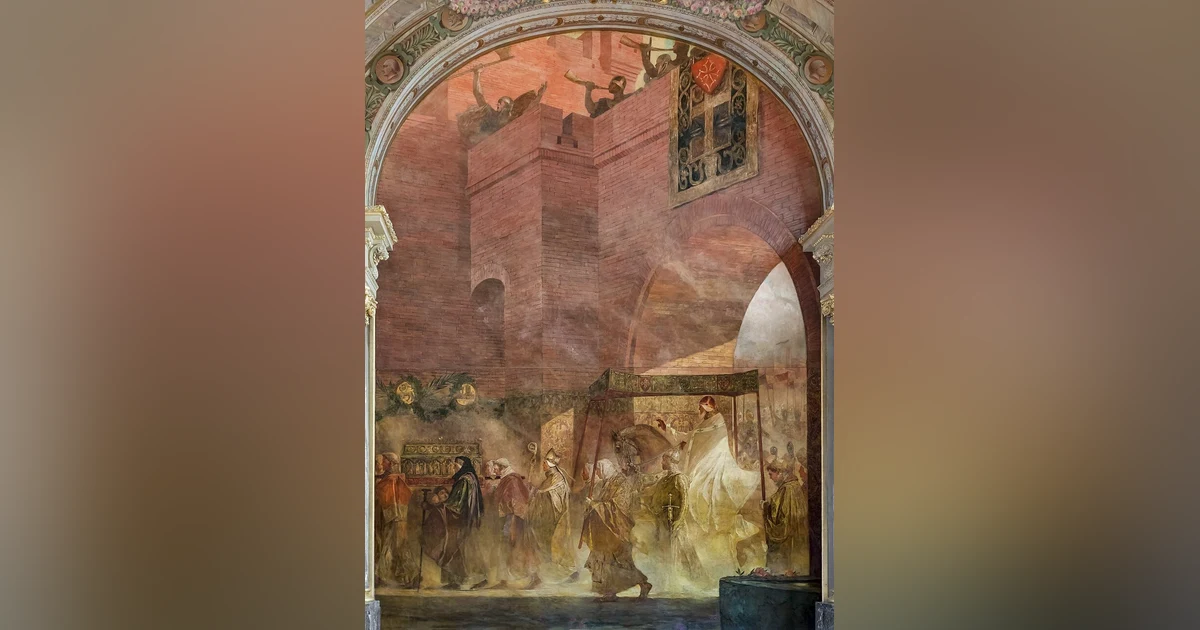


Toulouse dominates Occitania but who will control Toulouse?
Great cities have historically exercised influence and power well beyond their own territory. Large urban areas like Portland, Oregon or Boston, Massachusetts dominate their states’ economy, culture and politics. Even greater cities like Stockholm or Tokyo control their respective countries. Some, like Classical Rome or Ancient Babylon ruled empires that spanned entire continents. A rarer few, namely 19th century London and late 20th century New York City, arguably ruled the world.
If I asked which city has historically dominated France the answer is obvious. Today around 1 in 6 French people live in Greater Paris, an area known as the Île-de-France. Not only is Paris by far the largest city but because France is such a centralized country virtually every important decision from fashion to policing is made within walking distance of the Seine River. To put it another way: a French person can live in a cabin in the Pyrenees and be an entire day’s journey from Paris, but Paris stands always right outside their door in the form of the cop, the tax official, the social security worker, the postal worker and countless other state employees who get their marching orders from the capital. Actually, given our digital age, Paris is already inside the house, determining what goes on our rural bumpkin’s television screens and on the French-speaking part of the internet.
Paris has held extensive power over France since the medieval period when Clovis I made it the capital of the Frankish Kingdom. Paris was part of his personal domina from the Latin dominus. A dominus was an owner, usually a landowner. Unlike today, where private land must abide by local, regional and national law, a dominus held enormous power over the rules and people within their territory and would dominate the area. Roman emperors used the title Dominus noster, meaning ‘our Lord,’ claiming absolute power over their lands and people. Christians later adopted that title to use for God, who was referred to as Dominus, ‘The Lord,’ or Dominus noster, ‘Our Lord.’
While Paris exercised dominion over France for a long time, its power was not absolute. In fact, Paris’ domination of France is relatively recent. Under the Sun King Louis XIV, government centralized in the Parisian suburb of Versailles. During the Revolution the Parisian-based government expanded the city’s power and influence as never before, something which has lasted to this day.
Between the fall of the Carolingian House in France in 987 and this later centralization there existed a France that had several powerful cities which dominated their territories, particularly in the South. Bordeaux, Toulouse, Montpellier and Marseille rose to prominence and each became great cities at different times. In the period we are looking at, that being between the rise of Hugues Capet and the Albigensian Crusade, Toulouse was the center of politics and culture in Occitania. This city has a fascinating story as it not only sought to control Occitania but experienced truly revolutionary changes within its own walls.
Toulouse had been a significant city for a thousand years, though its power waxed and waned throughout the millennium. Toulouse rested halfway between the Atlantic Ocean and the Mediterranean meaning any goods between these two worlds had to pass through trade routes its counts controlled. Interestingly, Toulouse did not have significant river trade until the twelfth century. The city rested along the mighty Garonne but the river was very marshy, choked with fallen trees and impenetrable forests which took a significant amount of effort to dislodge before it became easily navigable.
For centuries the wealthy Counts of Toulouse dominated Occitanian politics and expanded their power southeastward. One of their most important holdings was the castle of Saint-Gilles. This coastal stronghold, just south of Nîmes, was so important that some of their counts were identified not as Counts of Toulouse but of Saint-Gilles, the most famous being Raymond IV who you might recall led the largest army during the First Crusade.
Despite all of its power, the city was never fully secure. We’ve already gone in-depth into the rivalry between the House of Toulouse and the House of Barcelona and the various anti-Toulouse campaigns led by the Trencavels and Occitanian coalitions. The Count of Toulouse’s true archival was the Duke or Duchess of Aquitaine, thanks to a marriage which went sideways. In 1094 Philipa, daughter of Count Guillaume IV of Toulouse, married Duke Guillaume IX of Aquitaine. For a century the dukes of Aquitaine claimed that Toulouse was theirs by right through their connection to Philipa. This aggressive policy became particularly scary for the Toulousains when Aquitaine’s leaders became tied to royal houses, which was the case when Aliénor of Aquitaine married Louis VII of France and then Henri II of England.
In 1141 Louis VII besieged the city, using his wife’s claim as a justification. Count Anfos Jourdain held the city against the king long enough for him to tire of the siege and return to his usual battles against the Angevins. Speaking of which, in 1152 Aliénor switched sides and married Henri II of England. Fearing that the great southern city might fall into his arch-rival’s hands, Louis VII married off his sister to Toulouse’s Count Raymond V. While this alliance secured royal support it also meant that the Pink City became a front in the Angevin-Capetian wars for control of France.
While the two kings generally fought in the north, the south did at one point become central to the conflict. In the late 1150s the war between Toulouse and Barcelona over who would rule Occitania became so heated that both kings decided to get involved in support of their own allies. In 1160 Henri II led an army to Toulouse to solve the problem of the pesky counts once and for all. As Henri II arrived he found Louis VII positioned with his own host amongst the hills. Henri II chickened out first and used the excuse that it was unbecoming of a noble to fight against their own lord. I wonder if anyone actually bought that, considering that fighting against his lord was practically all Henri II did, when he wasn’t fighting against his own upstart sons, of course.
The next serious invasion of Toulouse by a royal took place in the 1180s when Richard the Lionheart attacked. The Counts of Toulouse begged Philippe II Auguste for help and the young king did…by invading Richard I’s northern territories. Not quite the help they were expecting, but just what they needed as it forced the King of England to pack up and fight his lord and peer in Normandy.
In 1196 Raymond VI married Jeanne of England, sister of Richard I. The marriage meant that the Angevins recognized the right of the Counts of Toulouse to rule their own city. For Raymond VI this was quite a bargain; he had managed to get one royal line off of his back and since his marriage only lasted three years before she died he was quickly freed to pursue better arrangements.
Of all the remarkable things that occurred in Occitania during this period none were as fascinating as the rise of the doomed Republic of Toulouse, whose story takes up the rest of this episode. In the late 12th century Occitania experienced a feudal crisis. The power of great lords declined, largely due to previously discussed landholding patterns and the shrinking of ancestral territory. Because of this lesser aristocrats across the Languedoc sporadically seized power from their lords. In most cases these nobles did not violently overthrow their betters; instead they simply refused to honor obligations. My Millennial heart soared as I read this; it turns out our medieval ancestors also engaged in their own form of ‘quiet quitting.’ Of course, it was not hard for them to do. Many of the contracts they signed included ceremonial fees and services with limited mechanisms to force them to honor their oaths.
Yet, the Occitanian overlords had an even bigger problem on their hands: Italy. Or, more correctly, Italian innovations in politics. Across the northern half of the peninsula city-dwellers developed consoli, in English, ‘consulates,’ a type of representative democracy within individual cities. The consulates revolutionized a person’s relationship to their city. Rather than a city being just another place where a peasant worked for someone more powerful, men became citizens with rights, privileges and even power to make decisions. This dangerous idea that commoners might wield political power entered Occitania as lords invited renowned scholars, priests and poets from Italy to teach, minister and perform.
Across Occitania lords had to get creative to maintain their power. For a while the Trencavels looked like they might lose control of Béziers and Carcassonne, though they overcame their own townsfolk by successfully turning the knights against the bourgeoisie. In other cities, viscounts and viscountesses had to cut power-sharing agreements with the local archbishop and consulate to retain any measure of control.
Over the course of the 12th century power in Toulouse moved from count to aristocrats to the consulate. First, the counts accepted a power-sharing agreement between himself, the church and the bourgeoisie which guaranteed his preeminence by sidelining smaller noble families. It’s understandable that the Count of Toulouse did not want to put any potential rivals in positions of power, preferring to staff his government with educated commoners who posed less of a threat to him. What the count did not realize was that by turning over the levers of power to members of the Third Estate these commoners began to get it into their heads that maybe they should make all the decisions for themselves, rather than serve at their lord’s pleasure.
First, these Goodmen upturned the established order by siding with the rural aristocracy the Count had worked so hard to undermine. These aristocrats cozied up to wealthy urban merchants, selling them more and more food to feed the growing number of hungry mouths inside a city’s walls. Aristocrats grew their wealth, ensuring that their lesser children were not impoverished and the bourgeoisie gained powerful allies against the count.
If the Count of Toulouse won his siege against Louis VII in 1141, he lost that same battle against his own people. In exchange for their military service, the count gave up his right to tax salt and wine, two of the most important industries in the city. Further wars saw the Count trade away his rights for military support. In 1147 he gave up the right to force citizens to loan him money, the right to tax unfree citizens, and the right to levy a customs tax on goods entering the city.
While the House of Toulouse lost power in its home city it expanded across Occitania. There’s a reason why the patriarchs of that house became known as the Counts of Saint-Gilles, as they began spending even more time near their favorite Mediterranean fortress, particularly as they warred for control of Provence. Meanwhile, with daddy away, the bourgeoisie ran the city.
It was not long before the townsfolk had to prove themselves. While their count fought in the east the city’s Common Council raised forces to defend it from invasion between the years 1163 to 1165. The city’s leadership took full command of politics when it negotiated directly with Louis VII. As part of their new agreement, the King of France asked Pope Alexander III to lift his interdict on Toulouse, which had come under papal censure along with all of Count Raymond V’s lands for his tolerance of the Cathar heresy. Alexander III agreed to remove Toulouse from his naughty list but only so long as its count did not enter the city.
The war for Provence went badly for Raymond V. Simultaneously, the Kingdom of Aragon encroached into southern France, conquering Montpellier and reducing the Trencavels to a state of vassalage. When the Spaniards raided the Toulousain, that is the region under the control of the city of Toulouse, Raymond V knew it was time to come home. The townsfolk were hardly thrilled as their prodigal lord reentered the gates in 1181. Raymond V incited their fury when he asserted his dominance over the city. He sidelined the consulate, though he did not have enough power to end it entirely. For years sporadic violence broke out between the count’s loyalists and knights who supported a democratic government.
The power dynamic overturned in 1189. While Raymond V was fighting Richard the Lionheart the city rose up against their count. Raymond V was forced to sign away his power, giving up near-total authority to the consulate of Toulouse. In a shift that precipitated the French Revolution by 600 years the common citizens seized power from their lord and declared that they were in charge. This coup was unprecedented in France. Toulouse became the largest city and one of the few in the entire kingdom whose lord was completely subjected to the will of members of the Third Estate. No other Occitanian city subordinated its lords to the city to such an extent as Toulouse. The closest that accomplished this were in the Rhône valley as they were nearest to Italy and accustomed to dangerous Italian ideas.
Raymond V did everything he could to retake power. He tried to divide the landholders from the merchants. He also reversed his previous stance on Catharism and came out as a champion against heresy to win back the orthodox and the support of the pope. The consulate took a heavy blow when one of its leading members confessed to heresy and was sentenced to three years in exile to the Holy Land for his sacrilege. Despite all his conniving the count could not curtail the consulate.
Then the consulate radicalized. For over a decade, conservative elites ruled over the commune but in 1202 a populist party won in a landslide. These populists appealed to the common craftworkers, the sans culottes of their time, against the landed oligarchs and merchant elite. They promised to distribute wealth more evenly and ensure that prosperity was not confined just to patrician families. This radical populist party took direct inspiration from the most forward-thinking of their Italian contemporaries and desired to make a Republic of Toulouse similar to the Republic of Genoa or Republic of Pisa. This emergent Occitan city-state also remade their citizenship based on service to the state rather than one’s bloodline or wealth. Adult males who served in the militia and paid taxes gained the right to vote in assemblies. Under this new paradigm active citizens had more rights in politics than the patrician class and wielded nearly all judicial and legal powers in the city, save only a small handful of rights left to the count, who was by now a mere figurehead.
The cataclysmic change in Toulousain politics cannot be understated. It was centuries ahead of its time, in many ways harkening to the path that Paris took during the French Revolution or the Paris Commune of 1871. Simultaneously, it was in alignment with changes occurring in Italy and in some cases could be compared to the more populist phases of the Roman Republic, such as during the period of the Gracchi brothers. That’s the thing about history, it’s not so much a straightforward progression but an accumulating series of kaleidoscopic events between dramatic actors.
In direct emulation of Genoa and Pisa the aspirant Republic of Toulouse launched a war in all directions to establish a contado. Contado simply means ‘countryside’ today, but the Italian word had a particular meaning for this era. City-states on the peninsula were not confined to a major urban area; they could not be. Each city-state had to conquer the surrounding countryside. If they did not, their city would starve for lack of food, or they would go bankrupt having to pay to feed their countless hungry mouths. Thus, the Toulousains attacked towns and manors all around them to subjugate their people to the city.
These raids could be brutal; at one point the Toulousain knights razed the town of Fonsorbes and leveled the fortresses of Buzet and Mezens. These campaigns of conquest had mixed results. Some towns fell to the city and completely subordinated themselves to its laws and judicial system; others became tributaries. Some resisted, and in one case Toulouse actually agreed to pay a village to remain loyal.
This radical republic was short-lived. Toulouse became the center of the Albigensian Crusade and was besieged four times before it ultimately fell. Under the Treaty of Paris 1229 Count Raymond VII handed over his daughter Jeanne to Alphonse of Poitiers, brother of King Louis IX. The consulate of Toulouse tried to maintain its authority but between pressure from the French throne and the Catholic inquisition the democratic bodies lost most of their power.
What might Toulouse have become if the Albigensian Crusade had never occurred? Might it have led members of the merchant elite to rally commoners across Occitania and create their own democratic institutions? Or would it have become an isle of republican values surrounded by lords determined to destroy it as a demonstration of their God-given right to rule? It’s impossible to say. Like much of Occitanian history during this time, the Republic of Toulouse was a unique and tantalizing specter of what southern France might have become had the north not launched a war of conquest and decimation.
Sources:
Frederic L. Cheyette, Ermengard of Narbonne and the World of the Troubadours, 2001.
John Hine Mundy, Liberty and political power in Toulouse, 1050-1230, 1954