94: La Ville Rose
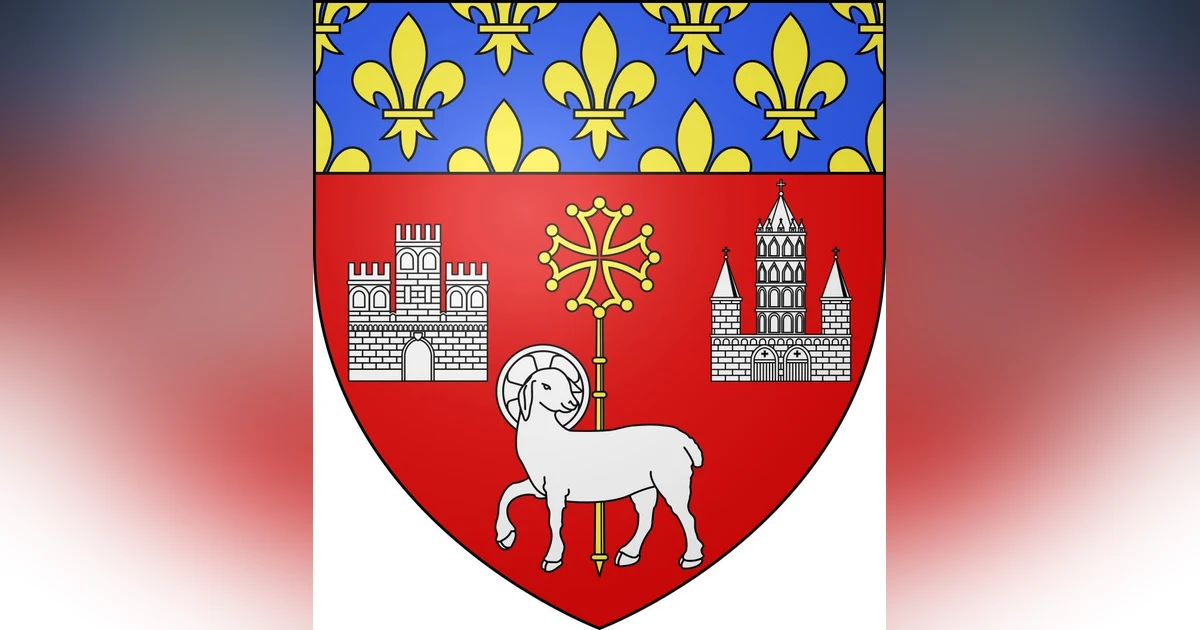


We're talking all about one of France's greatest cities: Toulouse.
Cities are incredible things. They are the living historical remnants of countless people’s actions and interactions. Any history of France is going to naturally center Paris as the penultimate city. Yet, Paris was not always the political and cultural lodestone it is today. Until the Albigensian Crusade, Paris was largely limited to the north. Before the war a number of important cities competed for preeminence. One of the most important was Toulouse, known as ‘La Ville Rose,’ ‘The Pink City.’ It’s worth knowing about this urban space and its long history in itself, but also as a contrast to Paris. As we shall see, this powerful southern city had a notable history that was independent of the north and in defiance of it for ages.
The area we call Toulouse was inhabited by humans since the Paleolithic period. In 2002 French archeologists discovered three minor necropolises while scouring the ground for construction of the Carmes metro station. These early inhabitants of Toulouse cremated their dead and kept the ashes in urns, which they kept alongside funerary goods. So much of these ancient cultures has been lost that we cannot know who they were or what they believed.
One truly intriguing thing to note about these ancient Toulousains is that they retained their core language against Indo-European incursion. It’s been a long time since this podcast went back into far antiquity, so just as a refresher: there lived many people in Europe before the Indo-Europeans arrived around 3,000 BCE. The Indo-Europeans left little architectural achievements but they were militarily advanced with a superweapon no one was prepared for: horses. The Indo-Europeans had domesticated horses long before most other peoples and rode chariots into battle. This warlike group with apocalyptic religious ideas likely conquered wherever they went, though it is possible that they intermarried and peacefully engaged with some groups. Either way, the Indo-Europeans became the dominant culture from Iberia in the west through Persia and India in the south and east.
The evidence of their triumphs is in our language. Virtually everywhere the Indo-Europeans went their languages predominated. Despite millennia of change, languages as distinct as French, English, Russian, Persian and Hindi have the same common origin and related words for common expressions. For example, the word ‘hundred’ in Proto-Indo-European was something like ‘kmtom.’ This became ‘kentom’ in Proto-Italic, which became ‘centum’ in Latin. From ‘centum’ we got ‘ciento’ in Spanish, ‘cent’ in French and ‘cento’ in Italian, among other offshoots. This same root, ‘kmtom,’ became ‘kumtom’ in Proto-Germanic, before transforming into ‘humdan,’ then ‘hunda,’ and finally ‘hundarada.’ In English this obviously became ‘hundred,’ while in German it became ‘Hundert,’ ‘hundra’ in Swedish and ‘hundrede’ in Danish. ‘Kmtom’ became ‘ĉatám’ in Proto-Indo-Iranian, which became ‘sad’ in Persian and ‘sed’ in Kurdish. The sound ‘ĉatám’ changed to ‘sat’ in Hindi, ‘sata’ in Bengali and ‘so’ in Gujarati. It is remarkable to think that today a person in Paris, Texas and Dhaka, Bangladesh are speaking languages that stem from the same source, though today our theoretical speakers are completely unintelligible to each other.
While Indo-Europeans spread out across the Eastern Hemisphere there remained pockets of indigenous cultures that survived their intrusion. The most notable of these today are the Basques who occupy the mountains of northern Spain and southwestern France, whose existing languages remains distinct from Europe’s mostly Indo-European languages. Bordering the Basque country was Aquitania. The ancient Aquitainians spoke a non-Indo-European language related to Basque, implying that these people successfully held out against the Indo-Europeans. While virtually the entire rest of Europe fell to the might of the newcomers or integrated into their culture, the Aquitainians resisted and maintained their own way of life.
Unfortunately, we know very little about the ancient Aquitainians except that they were different. Around 600 BCE Greeks from Phocaea founded the city of Massalia, modern-day Marseille. Shortly thereafter, the Greeks came into contact with a city which they called ‘Tolosa’ and its people the ‘Tolosates.’ What ‘Tolosa’ meant in its original Aquitanian is anyone’s guess, though the name stuck. Even as most of France’s pre-Roman names for places were replaced by Latin or French names, ‘Tolosa’ lives on in its French form as ‘Toulouse.’
If the Greeks knew little about these people, neither did the Romans. Julius Caesar famously declared in his book series Commentaries on the Gallic War, that “Gaul is divided in three parts.” The core part was home to the Gallic people, the uppermost belonged to the Belgae while the southwest was Aquitania. Caesar claimed that the people who inhabited Aquitania were the Volcae Tectosages, a Celtic people who originated in Bohemia. Unfortunately for us, the Romans lumped countless peoples together as ‘Celts,’ so Caesar’s designation isn’t very helpful. In either case, by the time the Romans came into regular contact with the region Tolosa served as the capital of the Volcae Tectosages and most important city in pre-Roman Aquitania. Like many Gallic oppidum, Tolosa grew wealthy from its mines and was renowned for smithcraft. Wealthy Tolosates were known for their golden torcs, neck rings which often bore the heads of animals at their opening around the throat.
Near the end of the 2nd century BCE the Romans seized southern Gaul, which they renamed the Provincia Romana, commonly called ‘the province,’ or in French ‘Provence.’ The Tolosates offered Rome their friendship and became close trading partners. However, they soon learned that Romans did not make good neighbors. The Romans set up a fort north of Tolosa, ostensibly to guard their trade routes, but of course it gave them the added bonus of securing their power in the region at Tolosa’s expense.
In the year 109 the migrating Germanic tribe known as the Cimbri invaded Provence and defeated the Romans in several large-scale battles. The Tolosates took advantage of the chaos and assaulted the fort above their city, massacring the Romans who watched over them. Their victory was short-lived. In the year 106, the consul Quintus Servilius Caepio led an army to Tolosa. A number of Tolosates joined the Romans out of fear or opportunism and they sacked the city. In the process, the Romans and their allies pillaged the temples and sacred lake. The Romans then took the Gold of Tolosa, a treasure hoard of over 100,000 pounds of gold and an equal amount of silver.
If the later Romans are to be believed, the Gold of Tolosa was already the stuff of myths. Records claimed that much of the wealth came from a Gallic invasion of Greece which involved the sacking of the Oracle of Delphi. The Greeks further claimed that when a plague descended on the Tolosates they threw their gold into the lake near their home as penance.
Stories begat stories and we can only guess at what is true. From my estimation it is far more likely that the gold came from a closer source, that is the mines within Gaul. Furthermore, the people of Gaul often held lakes and rivers sacred and gave offerings to them. But, this is all speculation; what mattered to Caepio is that the gold was now Rome’s, and by ‘Rome’s’ I mean, ‘his.’ Caepio sent the gold to Roman Massalia. Shortly after its arrival the soldiers guarding it were assassinated and the treasure disappeared. No one knows what happened to it after that, though many suspected that Caepio stole it for himself.
The Senate hesitated to prosecute Caepio given that he stood at the head of a large army and was well-respected. Yet, in 105 BCE Caepio made an error straight out of Greek tragedy. Under orders from Rome, he linked up his own forces with that of Consul Gnaeus Mallius Maximus. Maximus officially outranked him, but Caepio stemmed from an old patrician family and refused to cooperate with the novo homo, the recently-elevated man who rose to power on merit rather than his family’s reputation. At the Battle of Arausio Caepio’s pride resulted in the worst defeat Rome had suffered since facing Hannibal in the Second Punic War. The humiliated general now had to face the wrath of the Senate which, among other accusations, demanded he hand over the Gold of Tolosa. Unable to procure the treasure, the Romans levied the harshest punishments they could mete out to a patrician: they stripped him of his citizenship, exiled him and denied him xenia. Xenia, which was recently a focal point of the new Odyssey film with Matt Damon and was referred to as Zeus’ Law in the film, was the Greek practice of hospitality, whereby all people had to provide food and shelter to a traveler just in case the traveler were a god in disguise. To be denied xenia was akin to a medieval European Catholic being excommunicated; it was both spiritual condemnation and complete removal from society. Caepio fled to Anatolia and died in poverty.
Strangely, even though their patriarch was impoverished and died in exile, the Caepio family became enormously wealthy after his fall, leading many to whisper that they had kept the legendary gold. Not that it served them well. Three patriarchs of this family died horribly, the first from war and the second from illness. The last heir to the family was a man named Marcus Junius Brutus, who the Caepio clan adopted, after which he changed his name to Quintus Servilius Caepio Brutus, though today we know him simply as Brutus. Yes, he was that Brutus, the man at the center of the conspiracy to assassinate Caesar. He was the same man who Caesar called out to in Shakespeare’s play, breathing, “You too, Brutus?” as his final words as his beloved friend stabs him to death. Later on, Mark Antony and Octavian saw to Brutus’ end and with him the Caepio line.
Ever afterward ‘The Gold of Tolosa’ or in modern language ‘The Gold of Toulouse,’ became a byword for cursed treasure. If the Roman tales were to be believed, all who claimed it met a terrible fate. First the Gauls who succumbed to plague, then the Roman guards who were assassinated, Consul Caepio who died in exile and his heirs who died in war, illness and war, respectively. Whether or not this treasure ever existed is anyone’s guess though I like to think that this story became the archetype for later tales of cursed treasure. Next time you read Treasure Island, The Hobbit or The Lord of the Rings, watch the movies Pirates of the Caribbean, Indiana Jones and the Last Crusade or enjoy any story about cursed treasure that brings doom on whoever claims it, just know that the original tale likely came from the Gold of Toulouse.
Perhaps it was a good thing for the Tolosates that Rome conquered them in the Cimbri War. When Julius Caesar launched his conquest against Gaul, Aquitania was relatively unscathed. Caesar hardly spent any time in the region and instead put Publius Licinius Crassus, son of the triumvir Marcus Licinius Crassus, in charge of subduing Aquitania. While Crassus could be brutal, Caesar noted that his subordinate showed mercy to conquered military commanders who surrendered to the Romans, and Aquitania was spared most of the violence. In 52 BCE the Aedui prince Vercingetorix sent messengers across Gaul calling on all the tribes to unify against Rome. The leaders of Tolosa wisely chose not to join the coalition and were spared the worst of the violence. That same year, as the violence wound down, Caesar officially took control of Tolosa and incorporated it into Roman Gaul.
Tolosa avoided the violence of the Roman civil war and flourished under the empire. During the reigns of Augustus and Tiberius the Romans built a whole new city on the flat plain north of the hills which housed the old Tolosa. This new city was made in the Roman grid style, with straight, crisscrossing roads that were wide enough for chariots to maneuver through. Augustus even sponsored the construction of walls around the city, something which served no immediate defensive purpose, given how far Tolosa was from the German frontier, but which marked Tolosa as a city that enjoyed imperial favor. Tolosa was one of the select few cities in Roman Gaul that Augustus patronized in his efforts to Romanize the Gauls and solidify his legacy through the construction of monuments. Tolosa grew rapidly until its population hovered around 20,000 people. Tolosates soon came to enjoy all the benefits of living in a modern Roman city, which included, baths, grand temples and even a sewer system. At its height, Tolosa was one of the four most important cities in all of Gaul, alongside Lugdunum or Lyon in its center, Trier along the frontier, and Narbonne, capital of Provence.
If you’ve listened to our older episodes (as you should!) then you’d know that Roman Gaul disappeared from the records for a long time. Gaul bloomed and prospered, yet it also diminished in importance as the Romans directed their attention elsewhere. The next time we hear about Gaul was in church records. The Roman Empire in the 2nd and 3rd centuries was hostile to Christians and there are tales of believers being thrown to lions in Lugdunum. Like most major cities in the western half of the empire, Tolosa had a small and quiet Christian population. Its bishop was a man named Saturninus, whose life and origins are shrouded in mystery. Saturninus lived during the early stages of the Crisis of the Third Century when Plague wiped out a fifth of the empire’s population. Mass death opened the country up to foreign invasion and internal strife. In this atmosphere of confusion the pagans sought to excise any minorities who they blamed for angering the gods. When the oracles failed to predict the future the Romans blamed Saturninus. They seized him and demanded that he and his followers abandon their faith and sacrifice to the gods. When the bishop refused the Romans condemned him to a brutal death. Legend holds that they tied his feet to a bull and spurred it to madness. The bull rampaged through town, breaking the body of Saturninus as it did so. According to Catholic tradition, two faithful women collected his remains and gave them a proper burial.
Saturninus’ martyrdom became a powerful rallying cry for Christians. His commitment to his faith even to the point of death inspired many to follow this new religion. His story also served as a point of pride for the Tolosates, who held him up as their martyr. After Constantine ended persecution against Christians, the believers of Tolosa decided to erect a church at the site where the bull ended his rampage. Known as ‘Notre-Dame du Taur,’ (Our Lady of the Bull), it was later rebuilt in the Late Medieval and Renaissance period and still stands today. However, Saint Saturninus does not abide there; his remains were placed in the 4th century Basilica of St. Sernin. The Basilica of Saint-Sernin was rebuilt in the 11th century, of which I’ll have more to say about later. Suffice it to say, Tolosa became a center of the Christian faith with its own saint. As you may recall from our episode on the Cult of the Saints, every city wanted to have their own saint as they gave spiritual authority to those who lived there. Saint Saturninus, in French ‘Saint Sernin,’ did not just provide a guiding light to Romans during dark times; his death also meant that the city’s bishops were among the most powerful and respected within Roman Gaul.
The year 406 was a desperate time for the Germanic peoples along the border with Rome. At this time a confederation of Vandals waged war against the Franks. The Franks defeated their enemy, but before they could seize complete victory the Alans joined with the Vandals and pushed the Franks back. The Vandal-Alan victory had a devastating impact on Rome. With the Franks defeated, Germanic tribes could now pass through their lands and into the empire, which they did in hordes. The brutal war had left many tribes without food for the winter and they desperately traveled to new lands looking for sustenance. On the last day of the year, hundreds of thousands of Germanic people crossed ice-covered rivers as they searched for food. The disunited tribes rampaged across Gaul, sacking virtually every major city, save only for Tolosa, whose bishop Saint Exuperius, oversaw a successful defense of the city.
A tidal wave swept across Rome and brought with it a whole new order to Tolosa. Just as Rome dealt with chaos across Gaul, it buckled under the Gothic invasions closer to the capital. As with the Celts, it’s hard to say exactly who these people were other than a part of the migrating Germanic peoples. Two distinct peoples, each led by powerful kings, emerged in Eastern Europe, which Romans later dubbed the Ostrogoths and the Visigoths. The Ostrogoths, in English ‘Eastern Goths,’ were named such because they lived in what is today southern Ukraine, while the Visigoths, ‘Western Goths,’ lived further to the west in what is today Romania. From these lands the Visigoths moved west and in 410 they sacked the Eternal City under their leader Alaric I.
The Visigoths then rampaged up and down Italy until Emperor Honorius struck a deal with them. Honorius offered to give the Visigoths control over Aquitania and recognition as foederati in exchange for their help in putting down a usurper in Gaul. The Visigoths agreed and in 418 they made Tolosa the capital of their new kingdom. We might think barbarians coming into the palace might ruin the place, but the arrangement was a lot better than them beating down the front door. While other cities suffered, Tolosa’s position as the prized capital of the Visigoths brought wealth and security to the city.
Visigothic Tolosa’s high point came in 455. Rome had recently been sacked by Vandals while the Visigoths ruled in glory and splendor. It was within the palace at Tolosa that the Visigothic king Theoderic declared the Roman Avitus the new emperor. The entire world had flipped upside down; the Romans were now taking orders from barbarians and the emperor in Rome served at the pleasure of a Gothic king from Tolosa.
This was especially humiliating given that the Visigoths were Arian Christians while the Romans were Catholic. It seems heresy and Toulouse have a long history together. While Catholics balked at the blasphemous faith of their overlords, Jews prospered under Arian Christians. The Arian Visigoths had no particular enmity with Jews and the two looked at each other as allies, given that they were two minorities surrounded by discontented Catholics. For this and other reasons, there existed a large Jewish community in Tolosa which remained well into the medieval period.
The Visigoths rapidly expanded north across Gaul and south into Iberia. For 89 years the Visigoths ruled over a syncretic kingdom that combined Roman law and custom with Germanic and Gallic culture. The Visigoths are perhaps best known for their brilliant goldsmithing which combined Germanic style with indigenous expertise and produced such masterpieces as the votive crown of king Recceswinth. As the political, economic, military and geographic center of the kingdom, Tolosa flourished as never before, becoming the preeminent city west of the Alps.
Everything was going wonderfully until the Franks arrived. When Clovis I unified the disparate clans this new Germanic people proved too strong for the Visigoths to hold back. In 507 Clovis I smashed the Visigoths at the Battle of Vouillé. The following year he took their capital. In just four years the Franks conquered Aquitania, forcing the Visigoths to relocate to Iberia, where they ruled from Toledo.
Frankish Toulouse was not nearly as glorious as Visigothic Tolosa. Toulouse became the Franks’ far-flung frontline fortress against Visigothic attacks from the Pyrenees to the south and from their holdout territory of Gothia in the east, along the Mediterranean coast. Paris became the wealthy capital of the Merovingian kings while the south became poorer.
Still, Toulouse did not quietly fade from the pages of history. As the Merovingians destroyed themselves in civil war the proud dukes of Aquitaine created their own independent state in 680. While the Merovingians claimed overlordship of Toulouse the last dregs of Merovech’s house could not subdue the Toulousains who had been hardened by centuries’ of war with their neighbors.
For a time, it looked as if Toulouse was on the upswing after freeing itself from the yoke of the Frankish kings. The powerful Dukes of Aquitaine ruled from their great fortress city which grew in wealth and prestige even as the Frankish realm crumbled into disunity brought on by the civil wars between the various mayors of the palace who had supplanted their do-nothing kings. Toulouse enjoyed 51 years of independence before it became the rock that a civilizational tidal wave crashed upon.
In a mere 8 years since first setting foot in southern Spain, Muslims from Africa conquered the Visigothic kingdom in Iberia. As those scant years passed refugees and dispossessed knights arrived in Toulouse telling tales of a new religious movement that had spread faster than any conquering army in known history. Though they could hardly have grasped the significance, Toulouse again became the frontier between great powers. In 719 Islamic forces invaded Gothia and raided into Aquitaine. In 721 a desperate Duke Odo rode north with his cavalry to ask the leading Frankish warlord, a man named Charles, to aid his fellow Christians, but Charles told him he was too busy consolidating his own power to concern himself with events in Aquitaine.
On 9 June 721, one of the most important battles of the early medieval period took place outside the walls of Toulouse. Al-Samh ibn Malik al-Khawlani, governor of the new country of Al-Andalus, arrived at the head of a massive army. It must have been a terrifying sight for the defenders on the walls as they looked out at the largest force Francia had seen in decades if not centuries. Moreover, this army was well-equipped with siege engines. The Islamic force had not come merely as raiders but as conquerors.
We cannot know exactly what happened next, though likely the assembled host spread out to forage for food and to chop down wood as they settled in for a long siege. It was at that moment that Duke Odo returned. Seeing the enemy forces scattered and out of formation, Odo immediately urged his cavalry into a charge. Odo’s sudden fury caught the mujahadeen completely off-guard and the Aquitanians massacred their foes. Al-Khawlani himself suffered a mortal wound.
This incredible victory dealt a severe blow to Al-Andalus. For 9 years the Umayyad Caliphate licked its wounds before launching a fresh assault into Francia. When governor Abd al-Rahman led a fresh force northward to raid western Francia he purposefully chose to avoid Toulouse, remembering the disaster that took the life of his predecessor. It was during this campaign that Charles distinguished himself and led his men to victory at the Battle of Poitiers, often called the ‘Battle of Tours’ in English, upon which he gained the moniker ‘Martel,’ meaning ‘the Hammer.’ Poor Odo; he won the far more important Battle of Toulouse, but to this day people still praise Charles Martel as ‘halting the Islamic tide’ or ‘defending Western civilization’ or other such stories. Charles Martel was the better propagandist then and his use of the victory at Poitiers to legitimize himself as the savior of Christendom is a lie that is retold even today.
It often seems like it doesn’t matter what is true, only whether or not people believe it. Charles Martel used the battle in his propaganda and unified Francia under his rule. His son, Pepin, then seized the throne, becoming the first Carolingian king. The rise of the Carolingians meant the inevitable fall of an independent Aquitaine and Toulouse. Pepin warred against the Duchy of Aquitaine for 8 years but eventually secured control over the territory.
Toulouse had returned to the Frankish fold, but its people remained fiercely independent. Pepin’s son Charlemagne knew this and he placed his own loyalists in power over the region to watch over the errant lords. During this time Aquitaine received the status of a kingdom within the great empire. While the three most powerful grandsons of Charlemagne divided the Carolingian world into West Francia, Lotharingia and East Francia, Pippin II, carved out Aquitaine for himself, much to the annoyance of Charles the Bald, who believed that it should have been his. From his stronghold at Toulouse, Pippin II hired Vikings to sack Bordeaux in 844. This ultimately backfired as the Norsemen spread tales of the incredible wealth in Francia and raided more frequently. In 847 they attacked Toulouse, though the city repelled them. Even if Toulouse held out, Pippin II’s ineptitude and reliance on Vikings turned his people against him.
In 848 Charles the Bald overthrew Pippin II and seized Aquitaine. To secure his hold over the territory he appointed a loyalist, Raymond I, as the new Count of Toulouse. Raymond I became the patriarch of the newly-formed House of Toulouse, which would rule over the city until 1249, shortly after the end of the Albigensian Crusade. Around the same time the Frankish Emperor made Ramnulf I Duke of Aquitaine. Toulouse became its own independent county while Aquitaine was alternately ruled from the House of Poitiers’ powerbase in Poitiers or from its most important city of Bordeaux. Effectively, Charles the Bald had separated Toulouse from Aquitaine, freeing the city to pursue whatever political or cultural path was most feasible. This eventually put Toulouse into the orbit of Occitania, southern France, rather than Aquitaine.
When Charles the Bald died the Carolingian Empire crumbled. Civil war and attacks from without ended the Carolingian House and the world Charlemagne had created. For two centuries Toulouse came under attack from Vikings, Magyars, Muslims from Al-Andalus and even fellow Franks. The proud city repulsed each in turn and stood unbroken.
As if in reward for its hardiness, the next two centuries were a golden age for Toulouse. The county flourished and became the great power in the southern heartland. The Toulusains constructed many great monuments during this period, including the original capitoul for the commune’s government and many great churches. The greatest of all these was the Basilica of Saint-Sernin. Began in the 11th century, Saint-Sernin stands to this day as the largest Romanesque building in all of Europe. The enormous basilica is perhaps France’s greatest construction before the Gothic era. It is both a masterwork of Christian architecture and distinctly Toulousain with its glowing pink brickwork.
Speaking of which, it is during this time that Toulouse became ‘La Ville Rose,’ ‘The Pink City.’ Since time immemorial buildings in Toulouse had a distinctive hue, stemming from the pink-colored iron-rich clay in the surrounding hills, which they used in place of stone. Yet, it was between the 11th and 14th centuries that the Toulousains perfected the brique foraine. If you visit Toulouse today virtually every building built before the last two hundred years has a distinctive rosy-pink color, making the city almost as iconic as Paris with its cream-grey stonework.
The history of Toulouse is remarkable in itself while simultaneously serving as a counterweight to a Paris-centered narrative of France. Tolosa actually predated Paris by centuries and was a major city long before the Parisii tribe settled on the Île de la Cité. Tolosates, later Toulousains, have always been a confident, proud and independent people. They were one of the few who resisted the Indo-Europeans. They and their fellow Aquitanians retained a unique identity separate from the rest of Gaul. They fought against Rome, and though they were ultimately defeated, they earned the respect of Augustus. During the Christian era they created their own unique identity around several important saints with Sernin becoming the city’s patron. The city then became the capital of the Visigothic Kingdom and at one point gave orders to Rome.
From the Frankish conquest until the year 972, Toulouse was the major frontier city that held back the enemies of Francia. Toulouse was the fortress against Visigothic incursion. Under Duke Odo the Aquitanians smashed an Islamic army outside its walls, delivering the most significant blow to Umayyad designs on Francia in a fight that was even more important than the more famous Battle of Poitiers. During the Viking Age Toulouse never fell to Norse raiders unlike other major cities such as Paris which was famously sacked by the warlord Ragnar. As the Carolingian Empire fell and before Iberian Christians could get back on their feet, Toulouse held off Islamic incursion and assaults by Vikings and Magyars. Finally, Toulouse became the artistic, cultural, economic, political and architectural heart of Occitania, whose Basilica of Saint-Sernin remains one of the wonders of medieval Europe.
So often histories of France tend to focus on the north because of its relative dominance. I’ll admit, I’ve been guilty of that at times given that I’ve spent so much time covering the history of French leaders, most of which were based in Paris. What we should try to remember is that France is much larger than just Greater Paris. Each part of the country consists of its own unique traditions, peoples and ways of life. Importantly, Toulouse played a major role in making Paris so dominant because this southern city served as a bulwark against first the Visigoths and later Al-Andalus. By uncovering the history of La Ville Rose we find a multifaceted story of a place and people who defied empires and millennia and helped define France. As we move forward and uncover its relative decline in significance and uniqueness we should keep in mind that this was not due to any deficiency on the part of the Toulousains; they simply did not have the power to stand against a concerted invasion from the north.
Toulouse would serve as a bulwark in the south one last time during the Albigensian Crusade as its leadership sought to defend Cathars from extermination. Even after its defeat and greater incorporation into the French state and a north-centric culture, The Pink City remains one of the jewels of France.
Sources:
The Catholic Encyclopedia by New Advent.
A letter from Jerome (409), https://epistolae.ctl.columbia.edu/letter/1222.html
Duncan, Mike (2017). The Storm Before the Storm. New York: PublicAffairs. p. 120.
PONS F., LAGARRIGUE A., BOUDARTCHOUK J.-L. , 2005, Discovery of protohistoric cremation tombs Place des Carmes in Toulouse (Haute-Garonne), Documents d'Archéologie Méridionale , 28, p. 61-69. http://epmp.huma-num.fr/sites-archeologiques-de-haute-garonne/